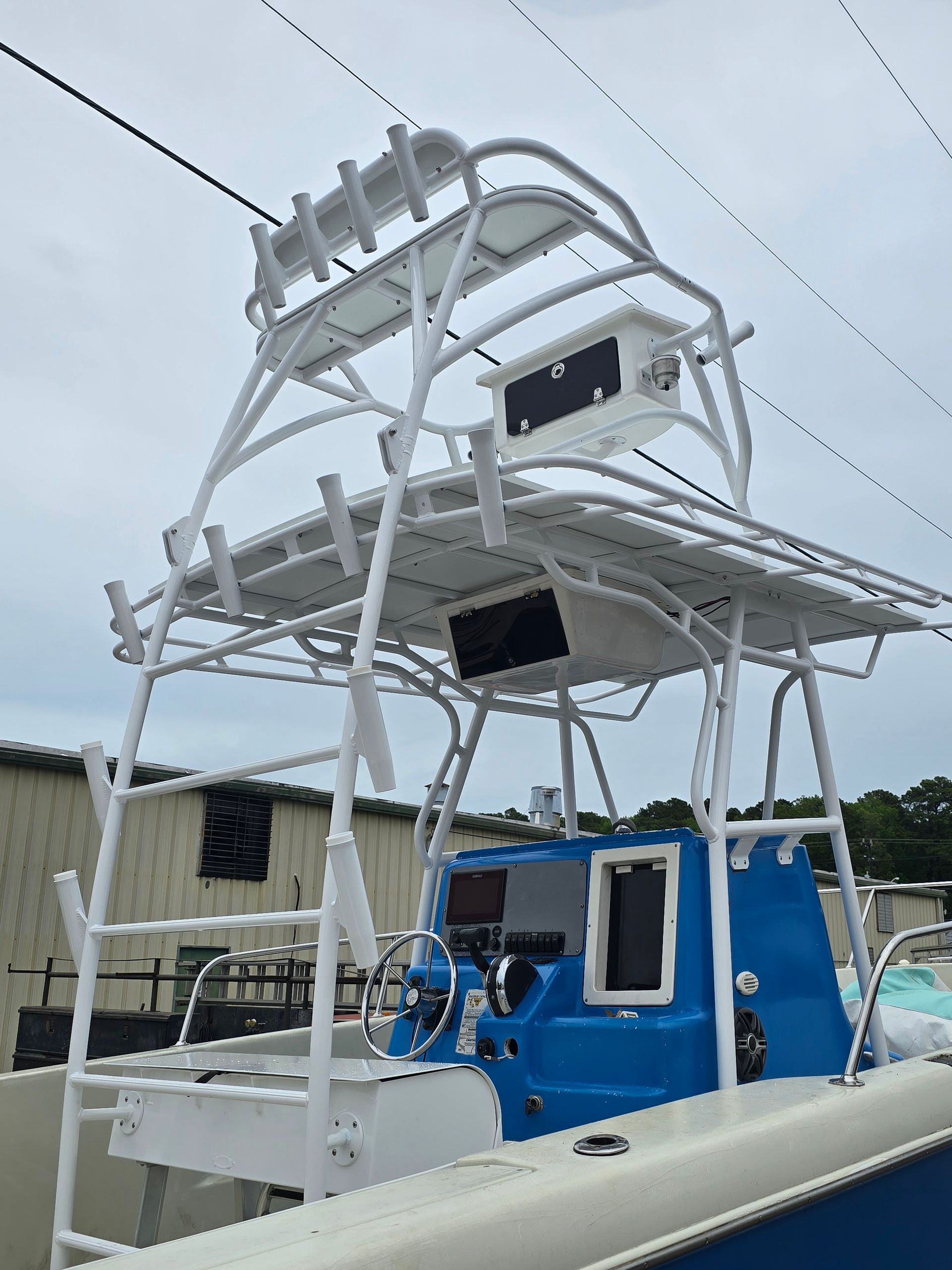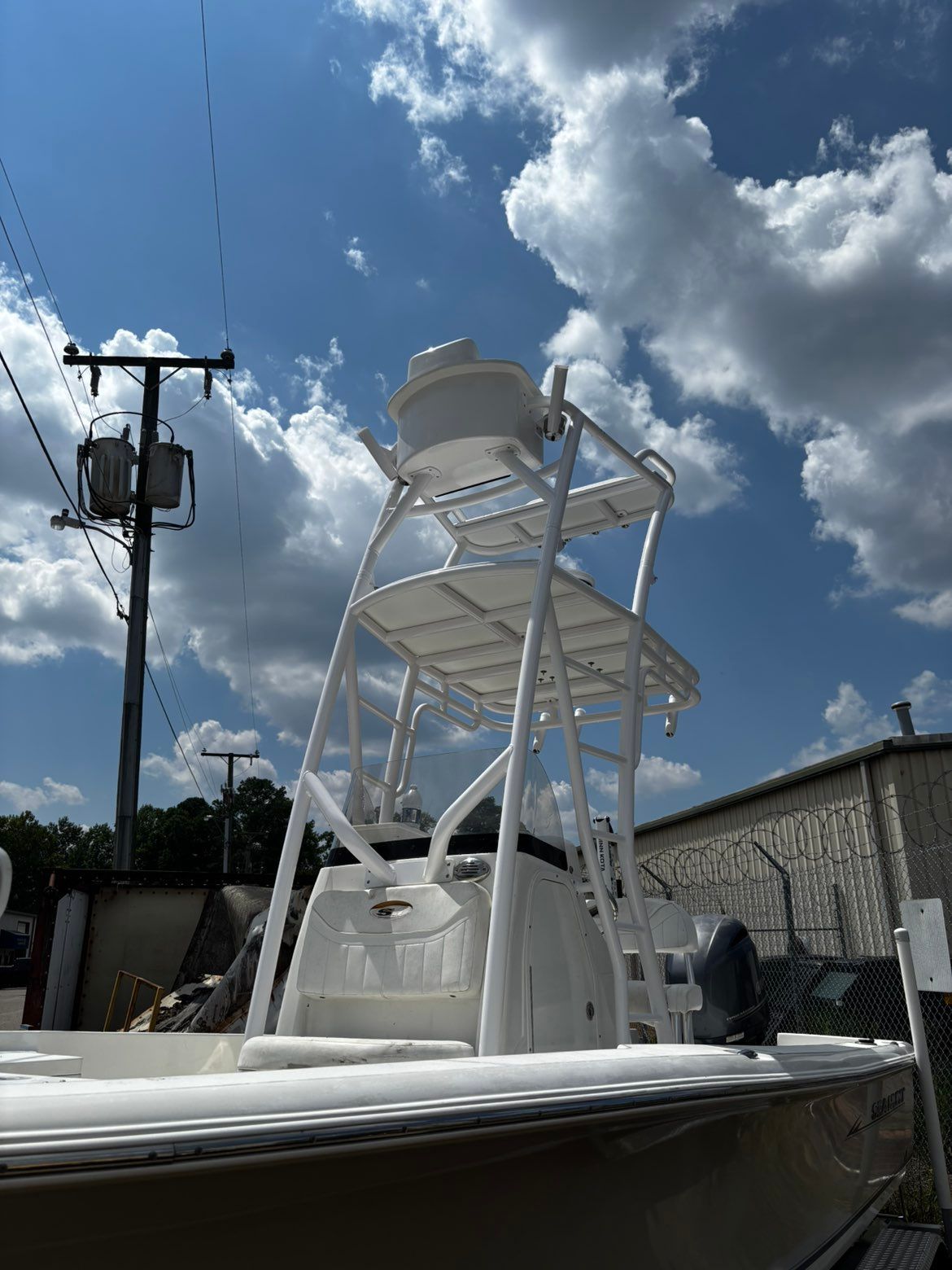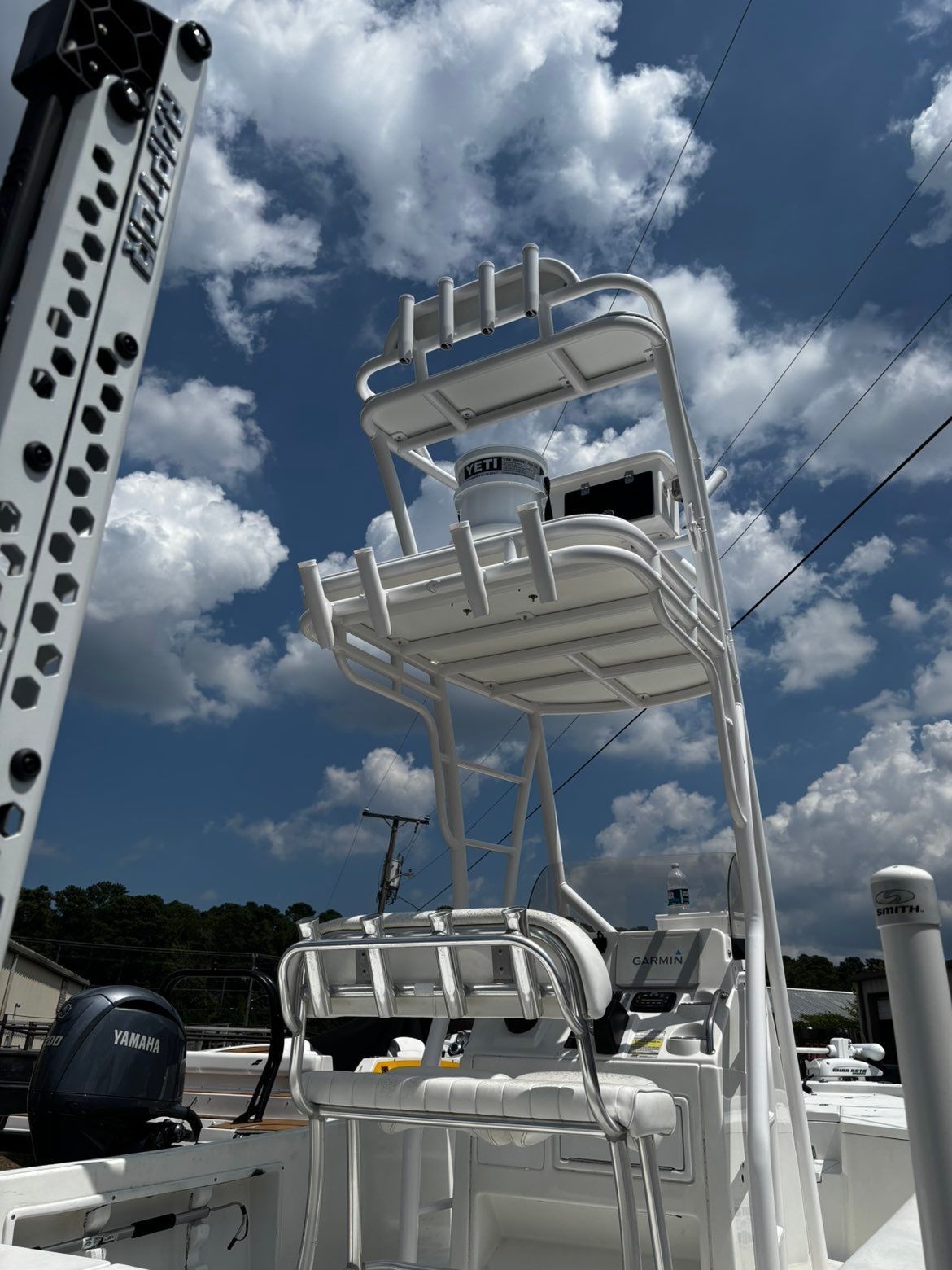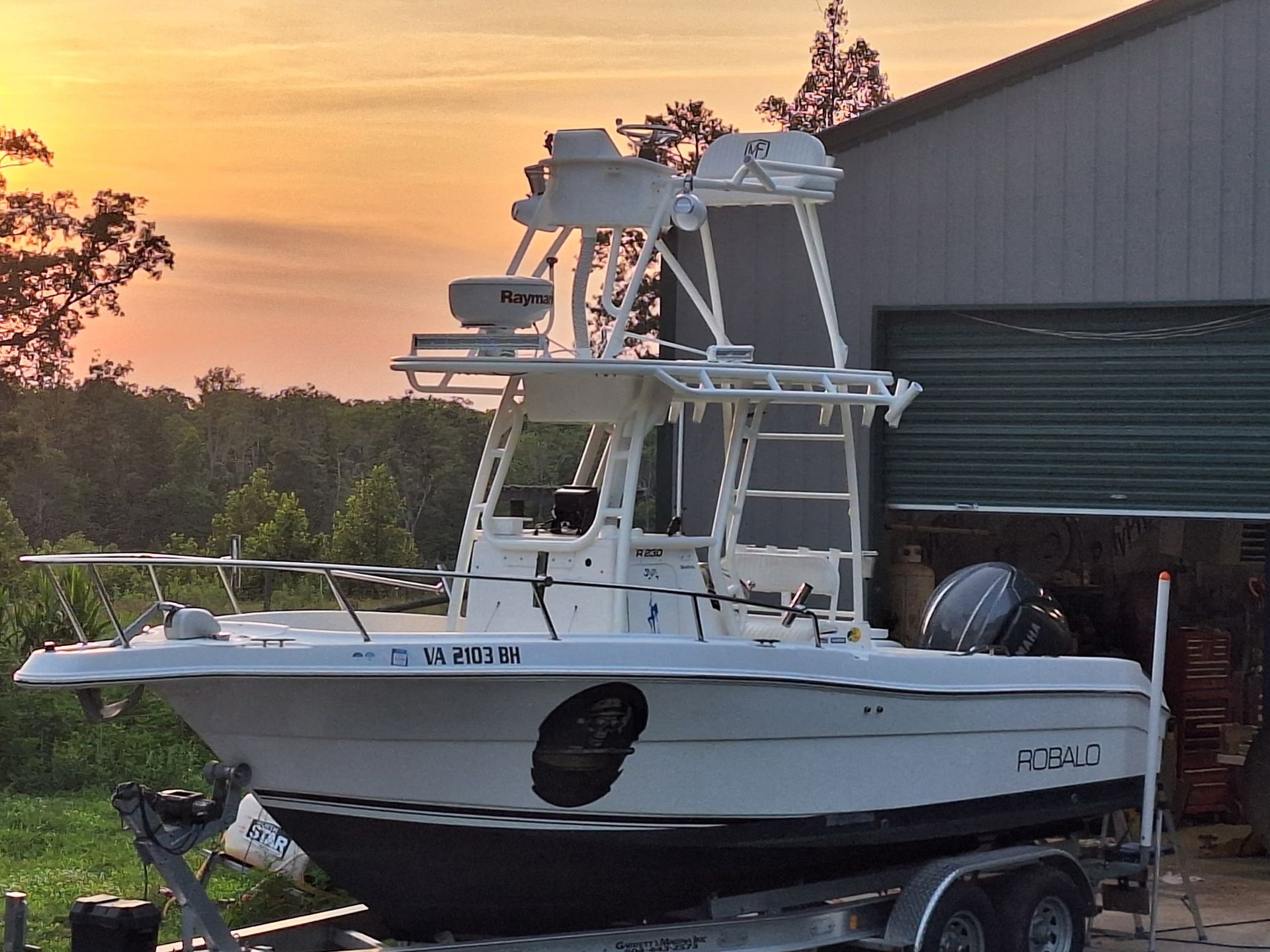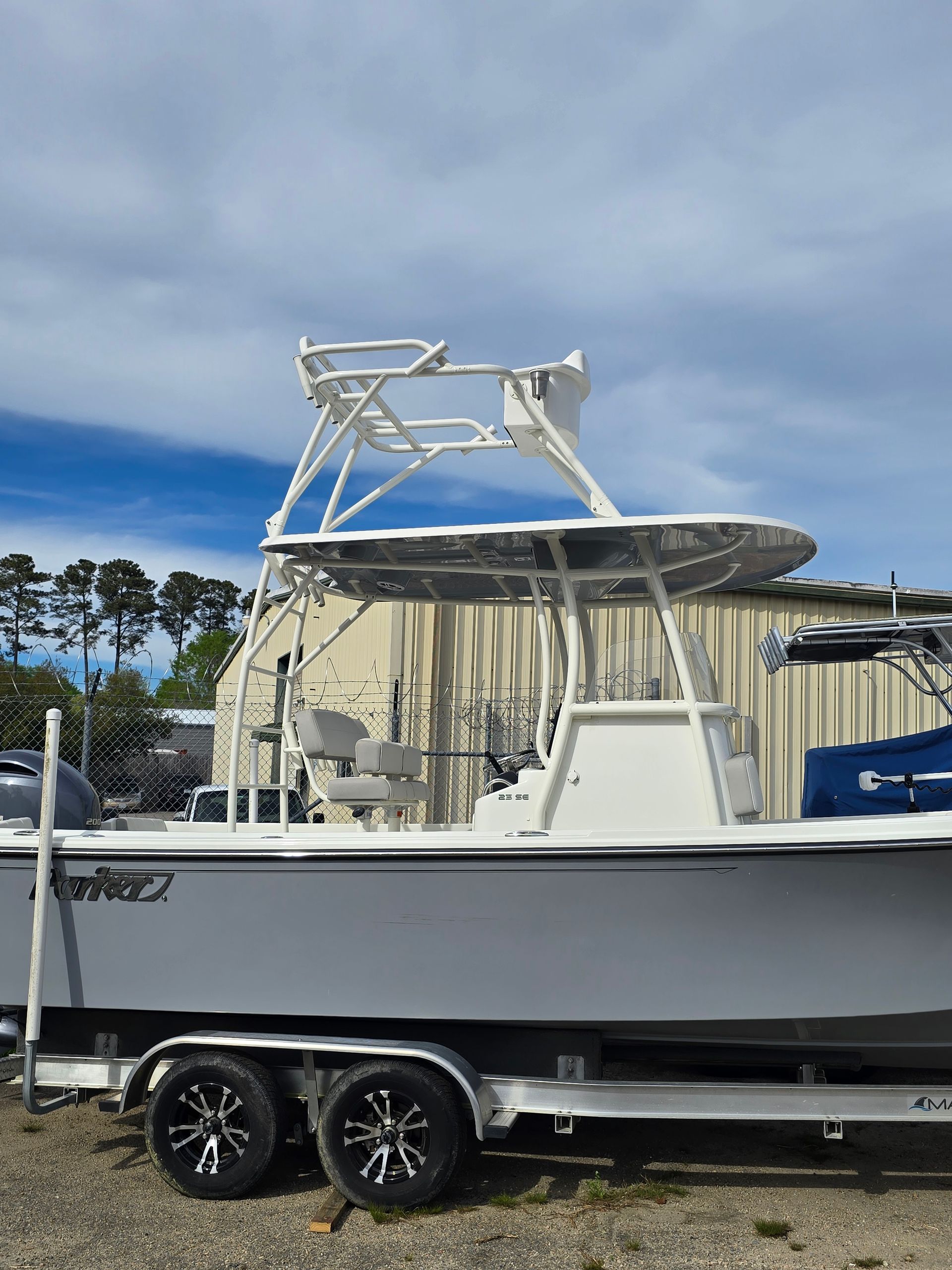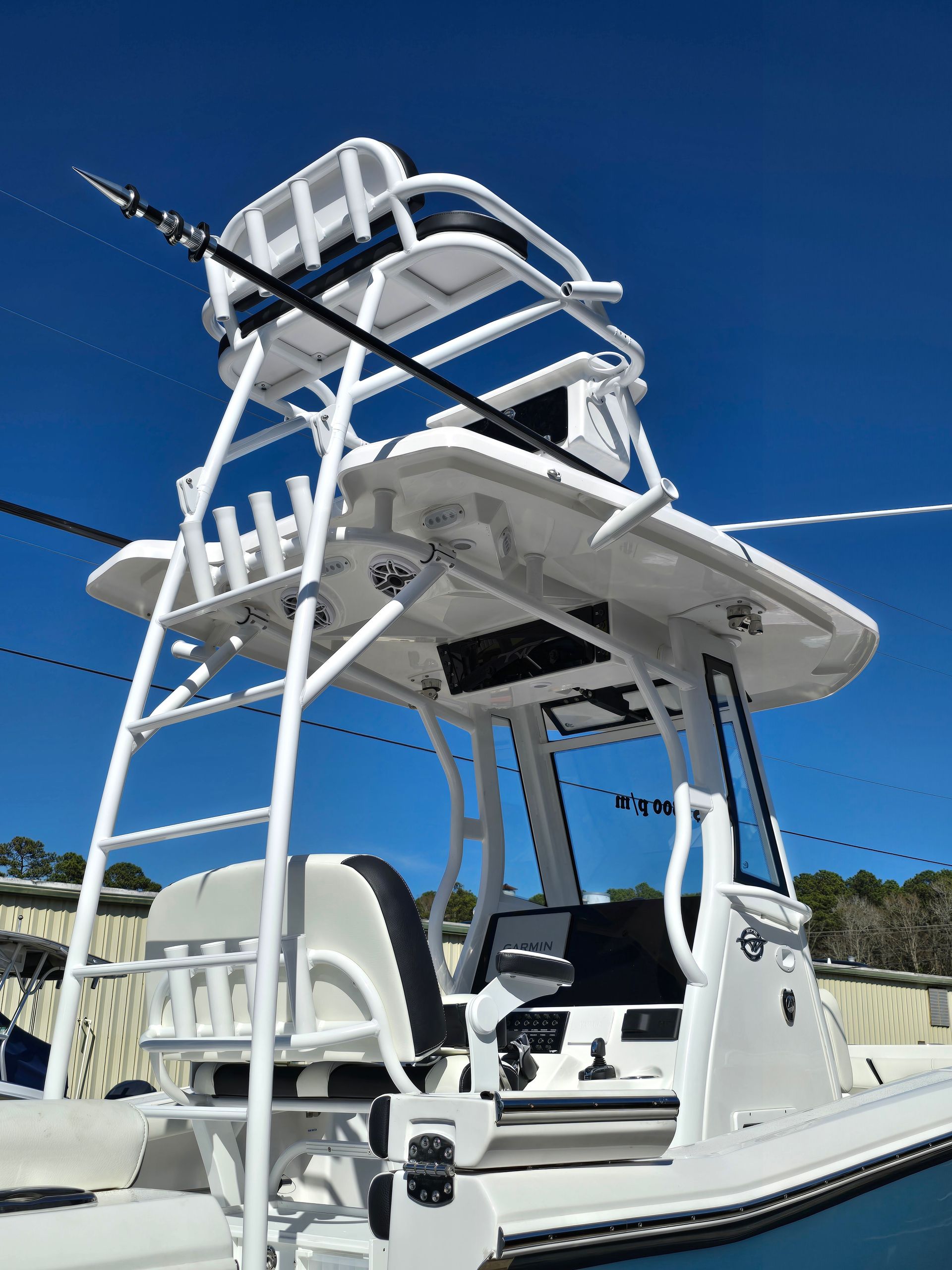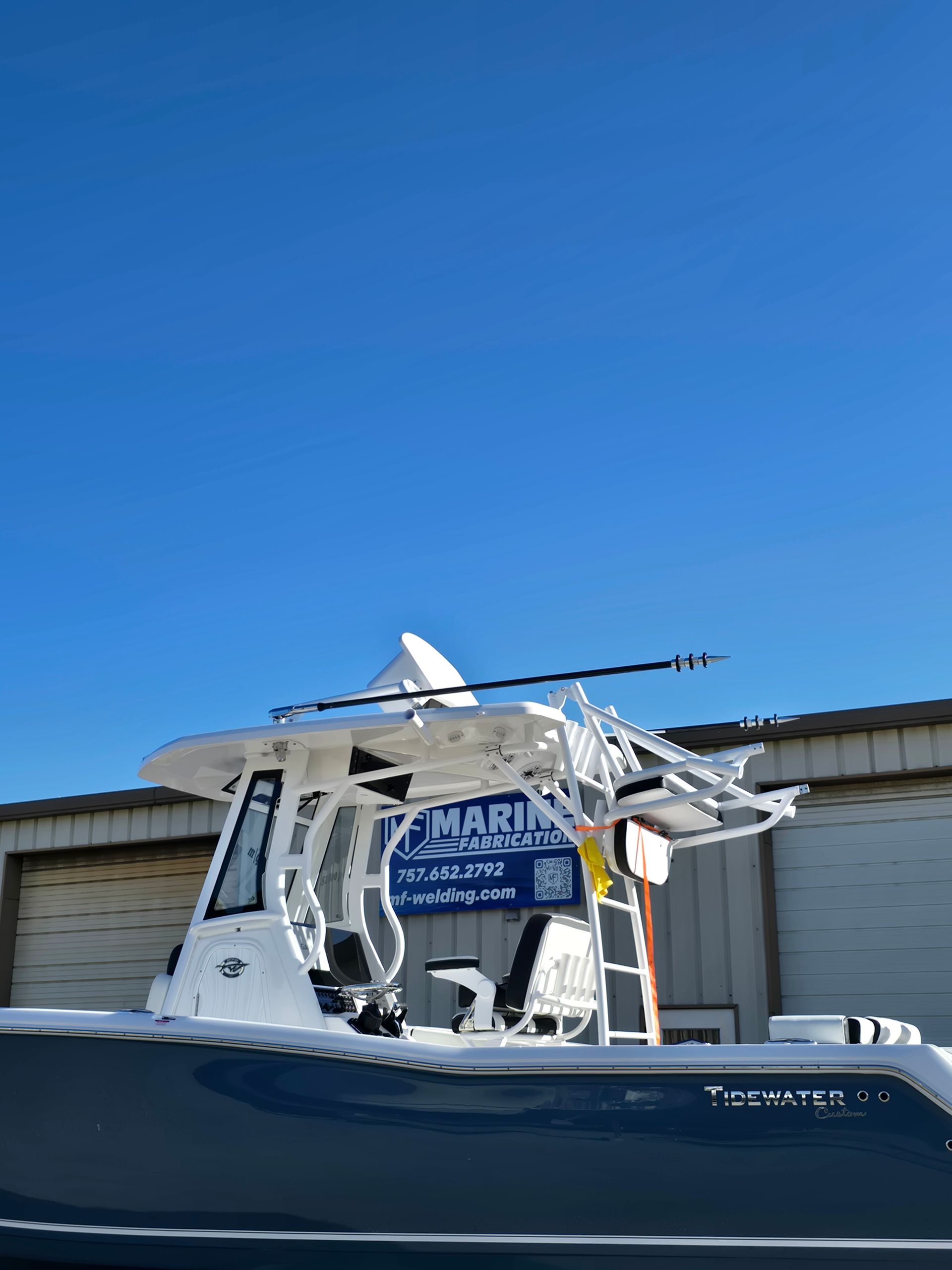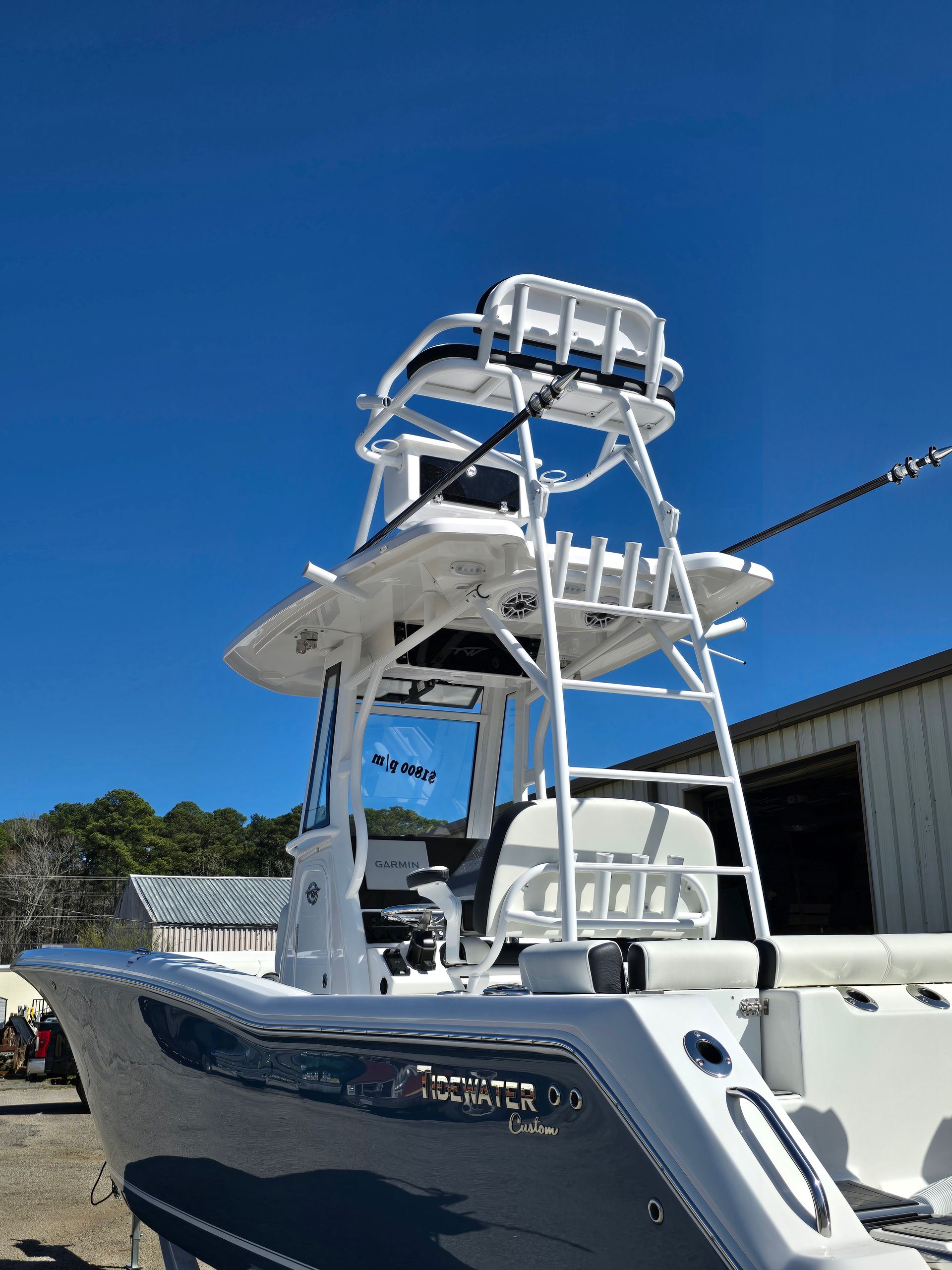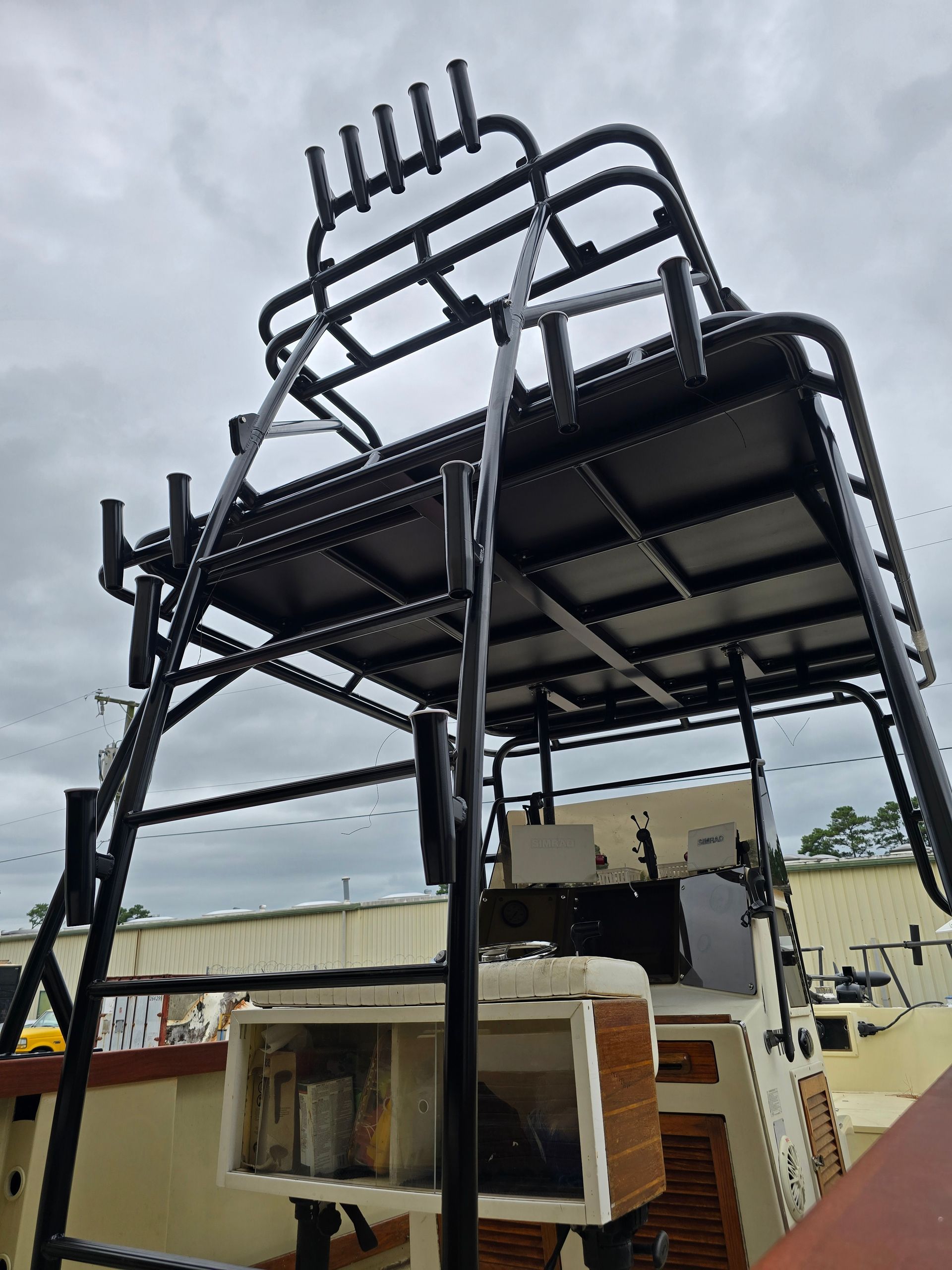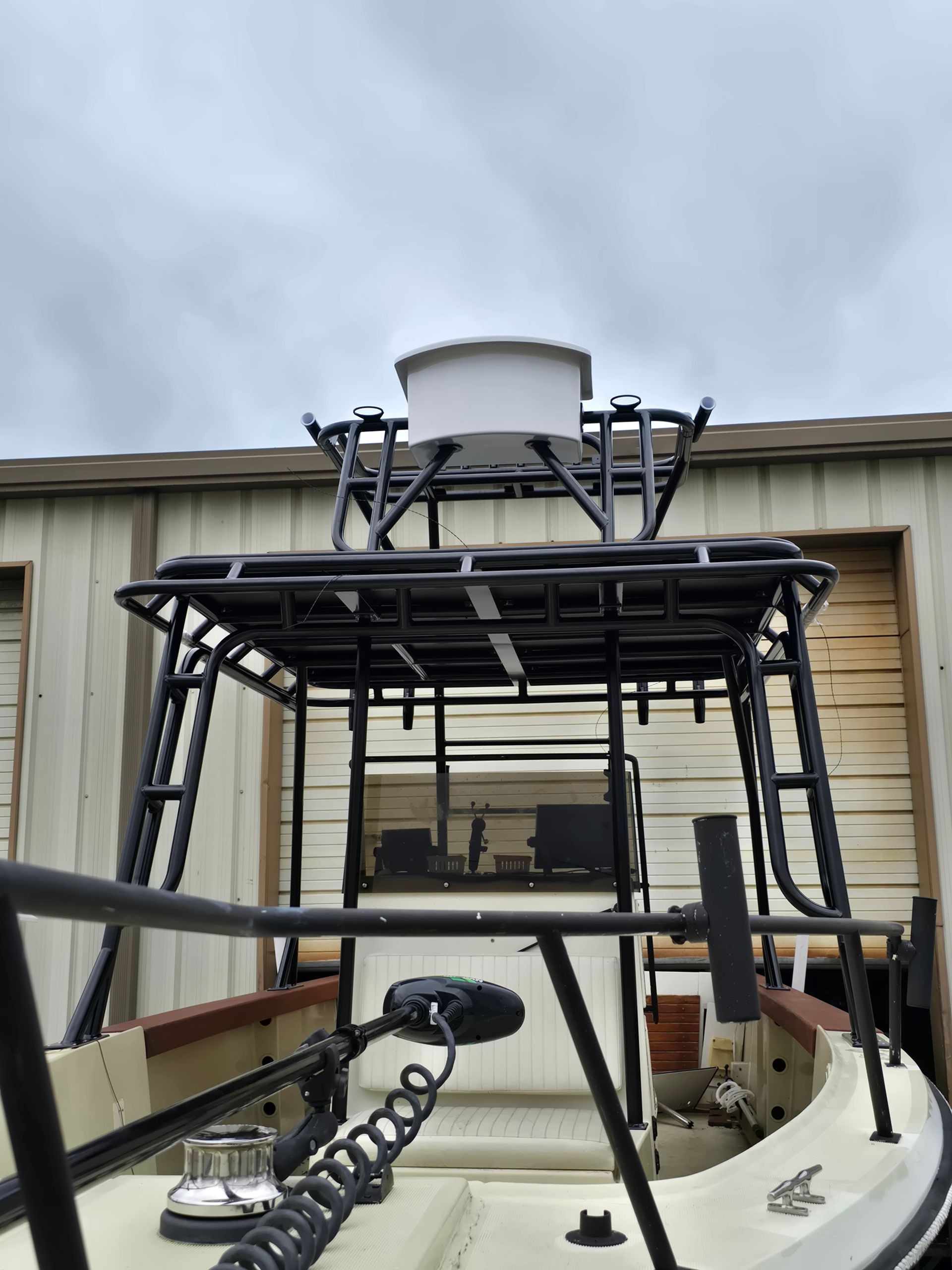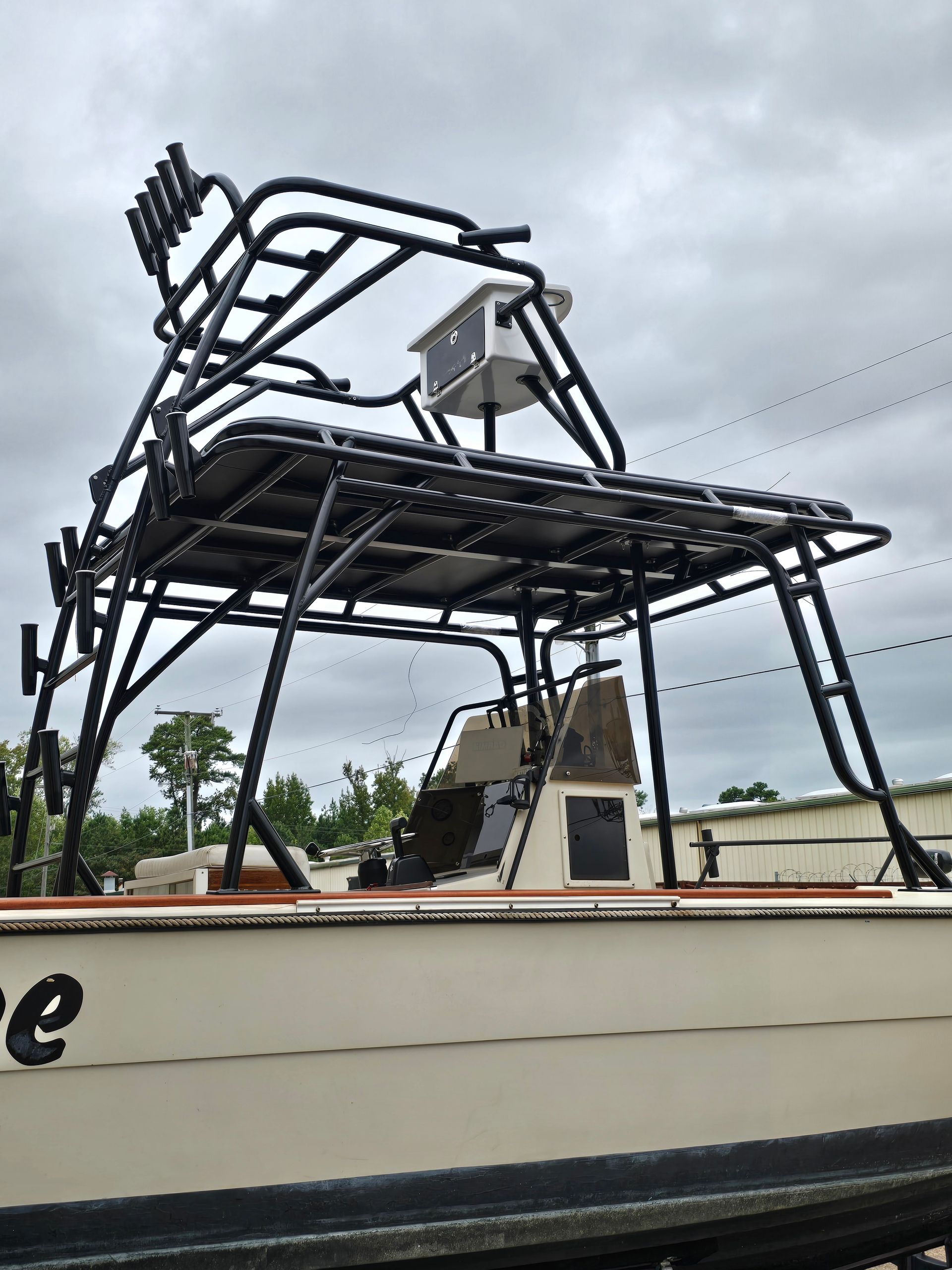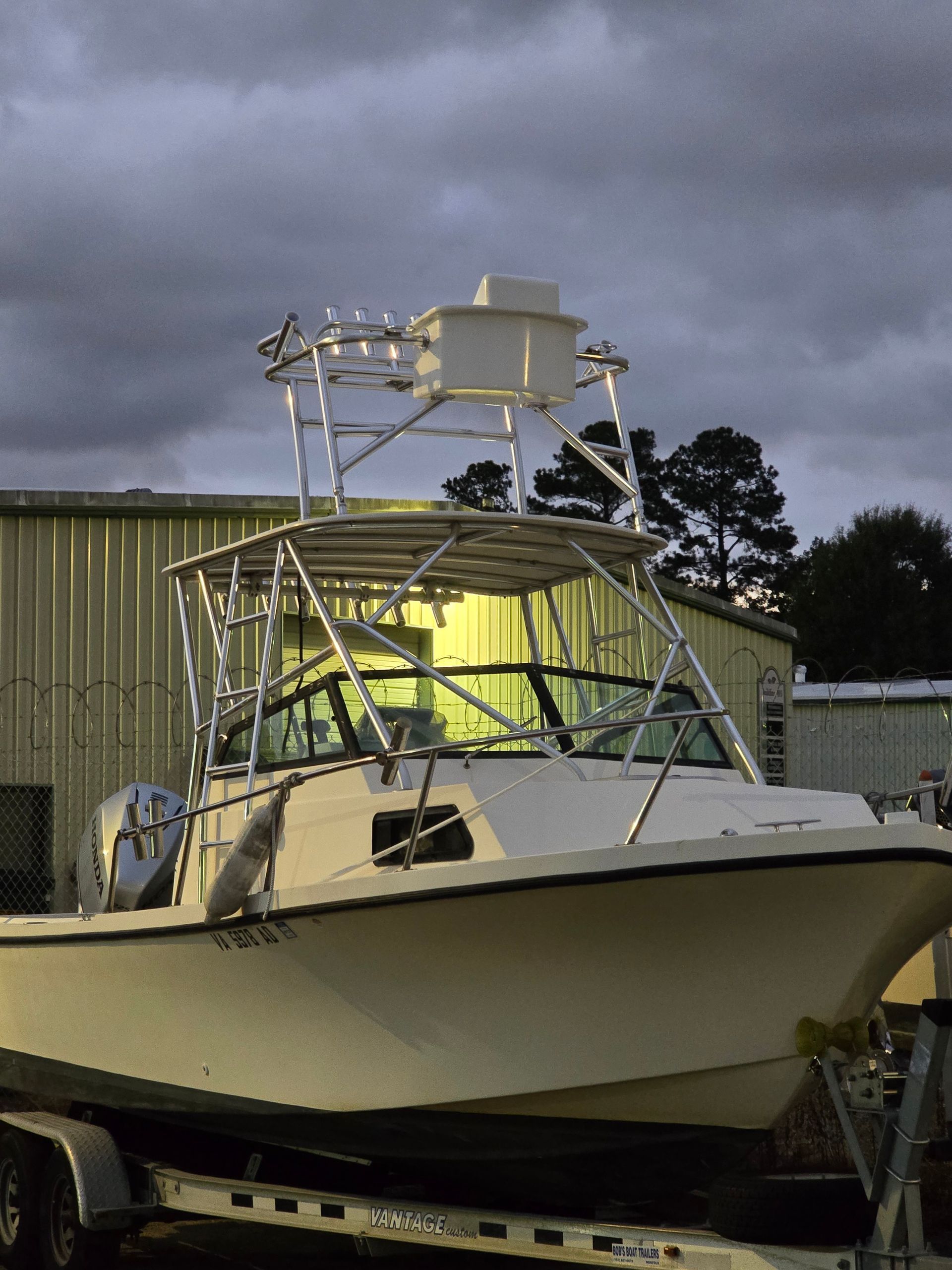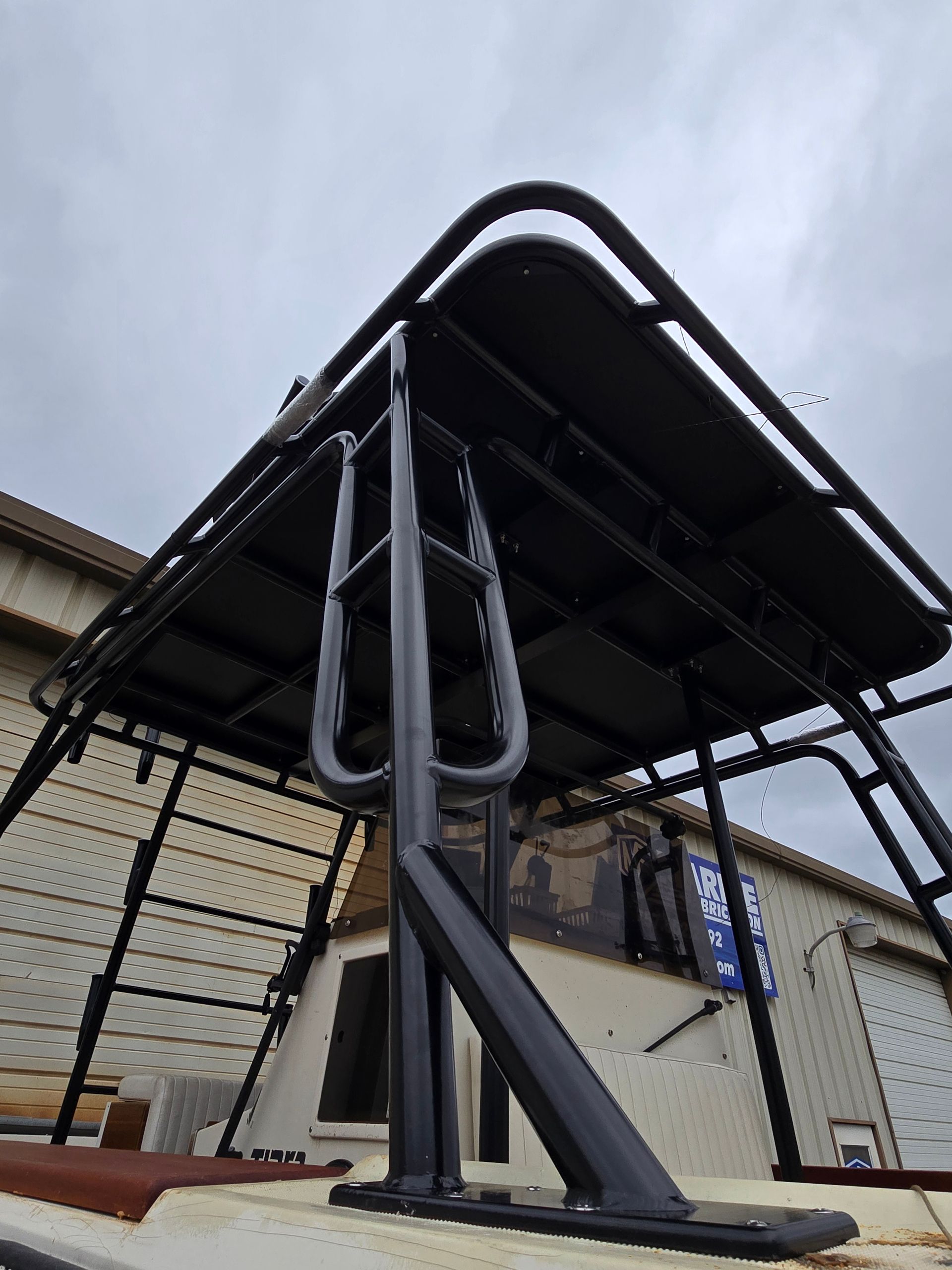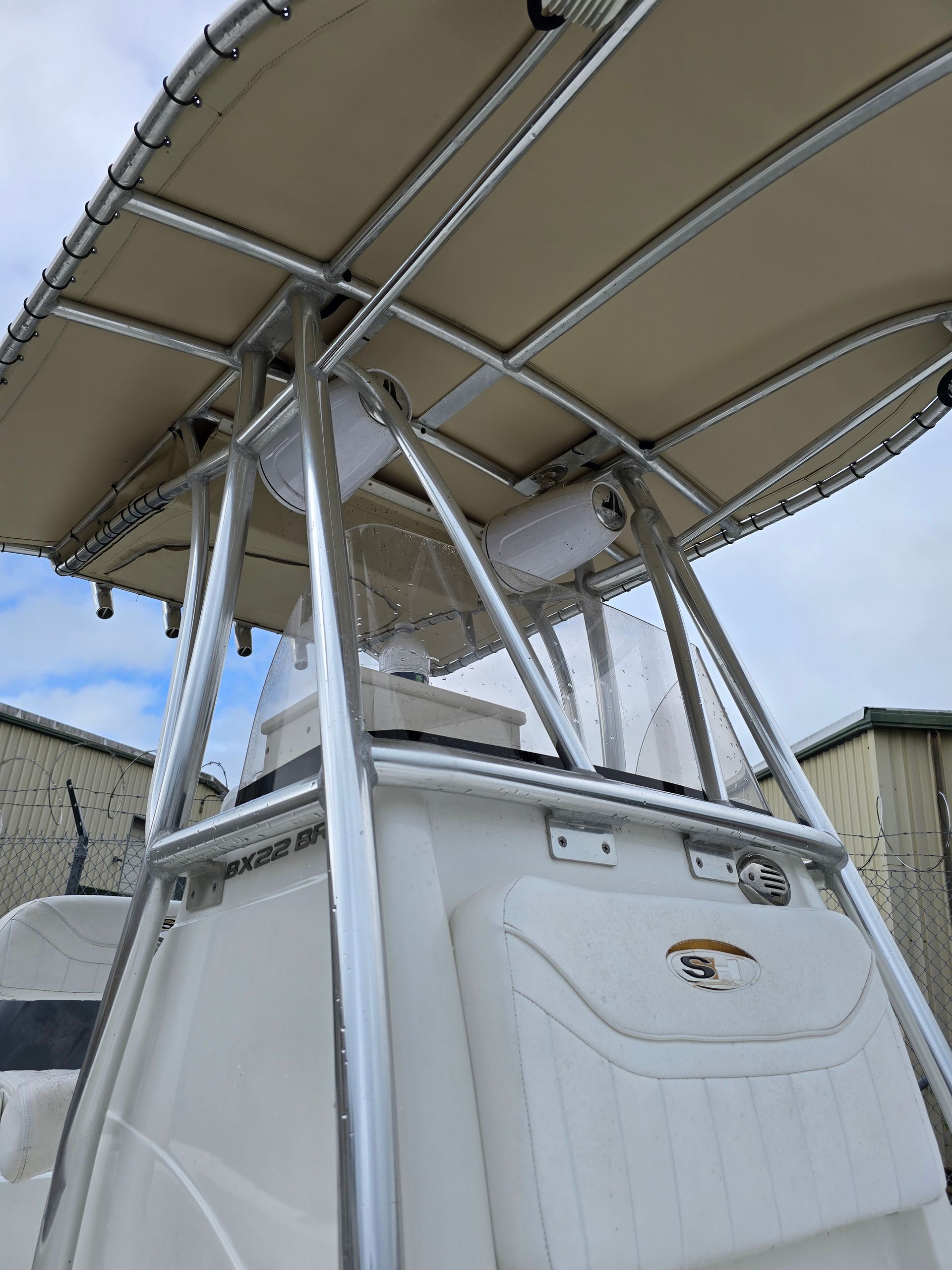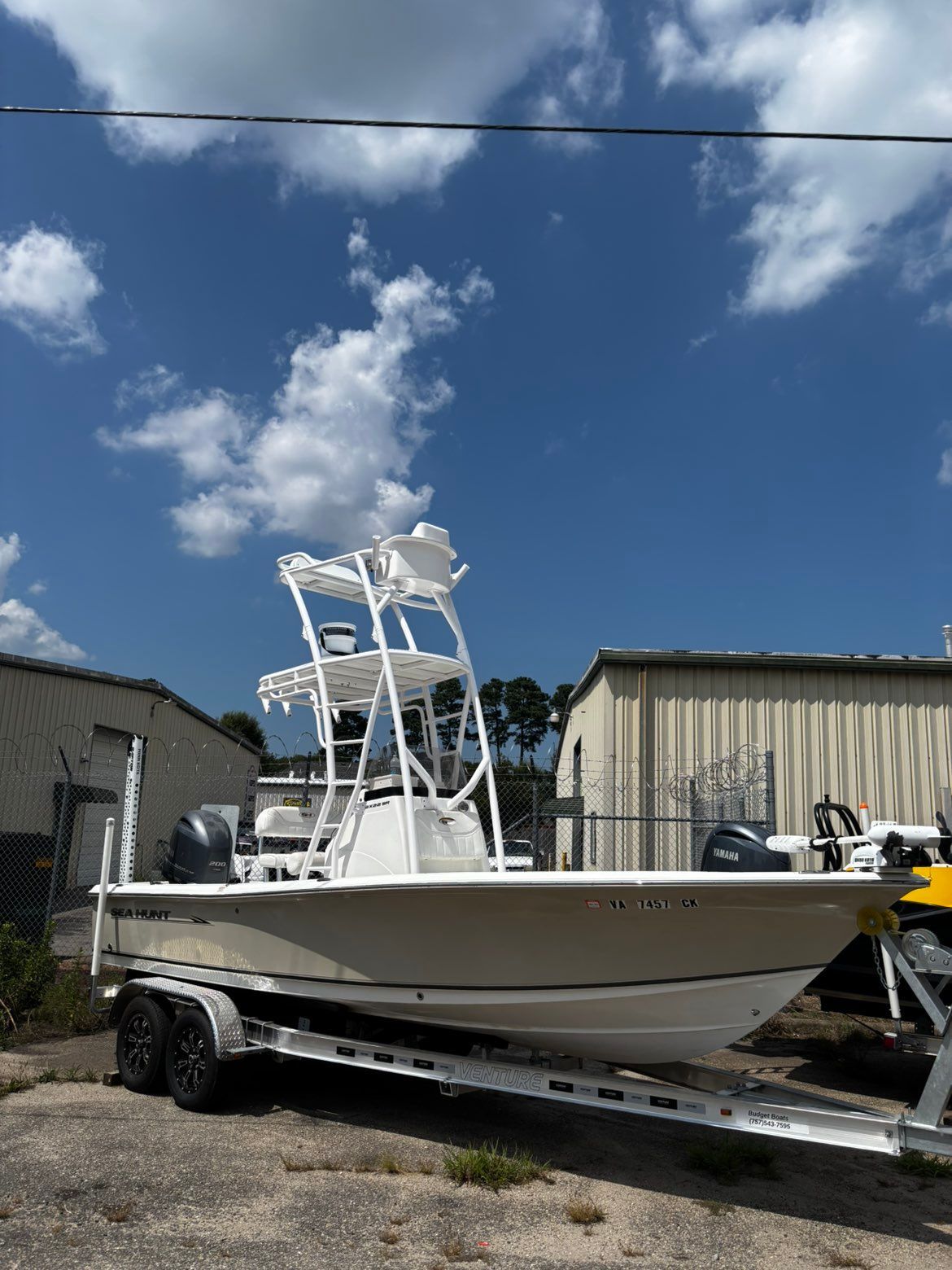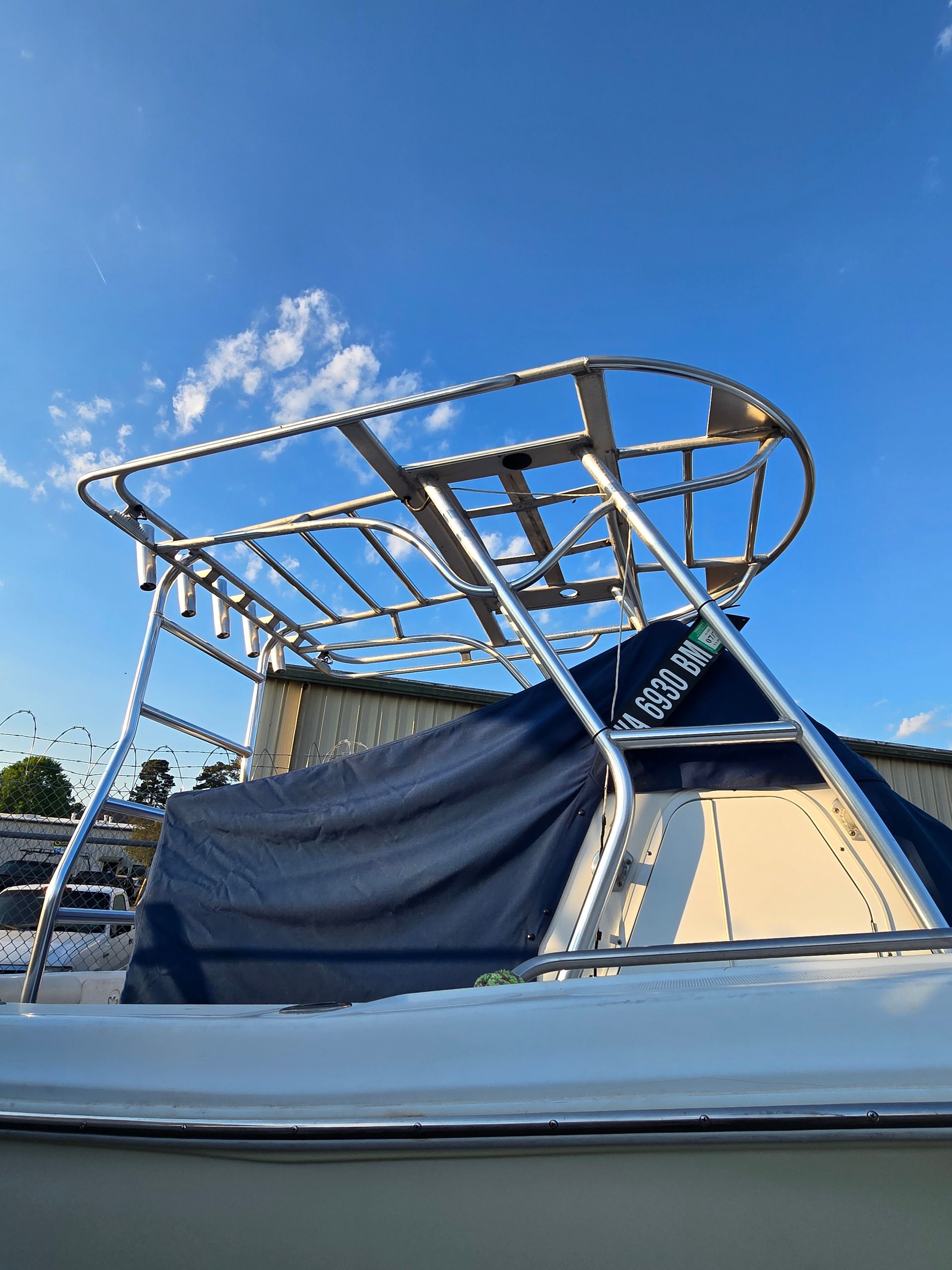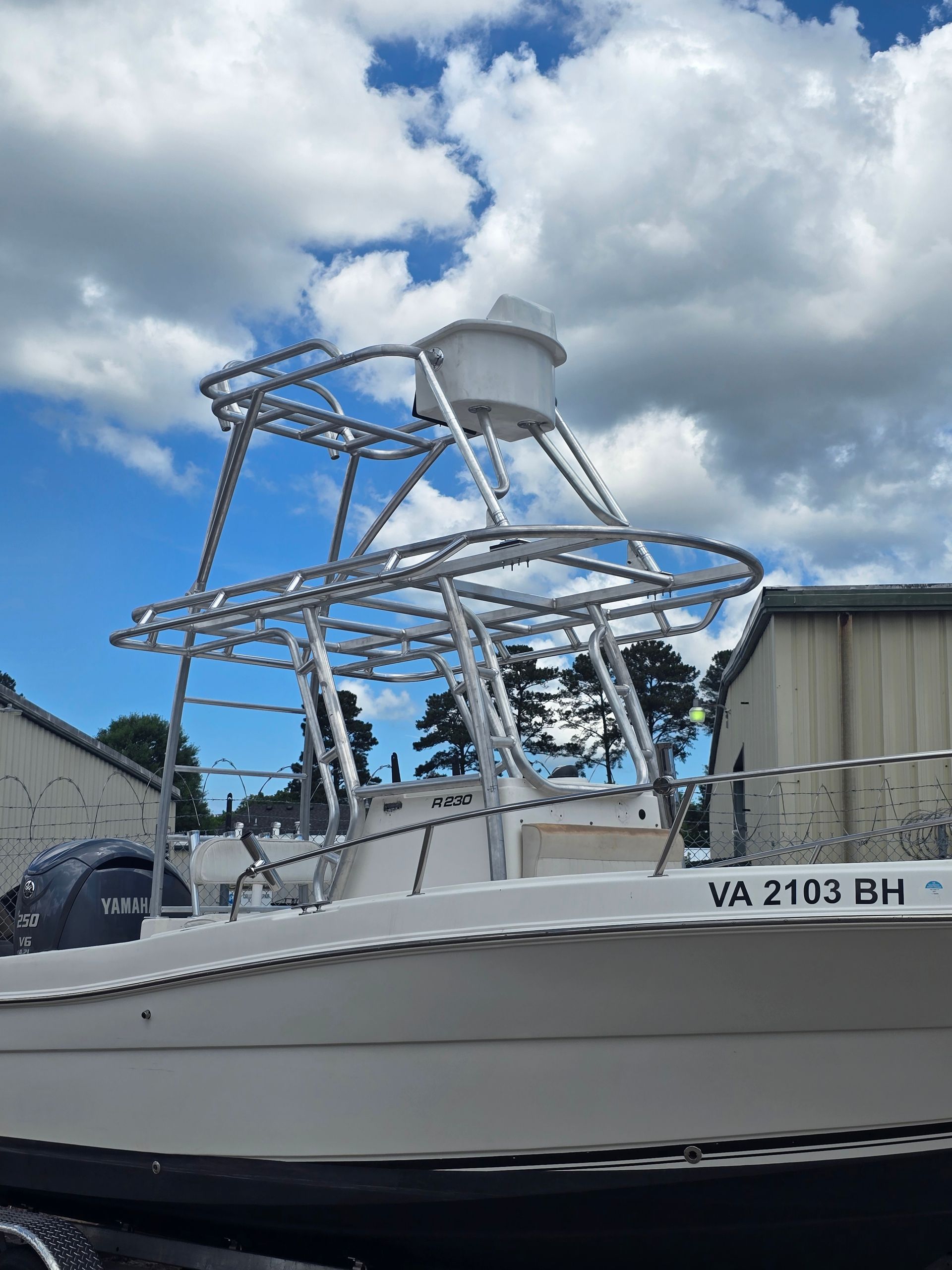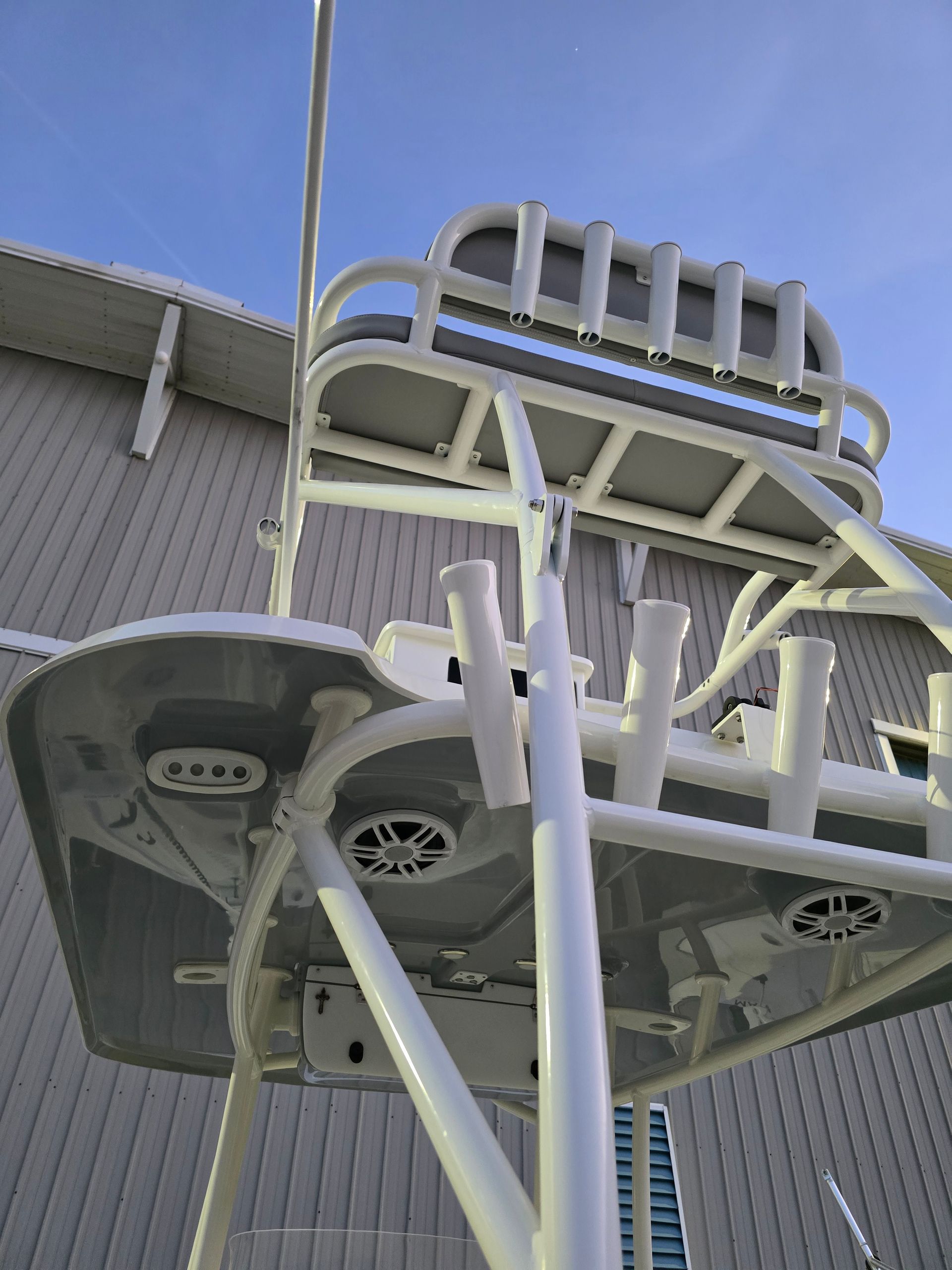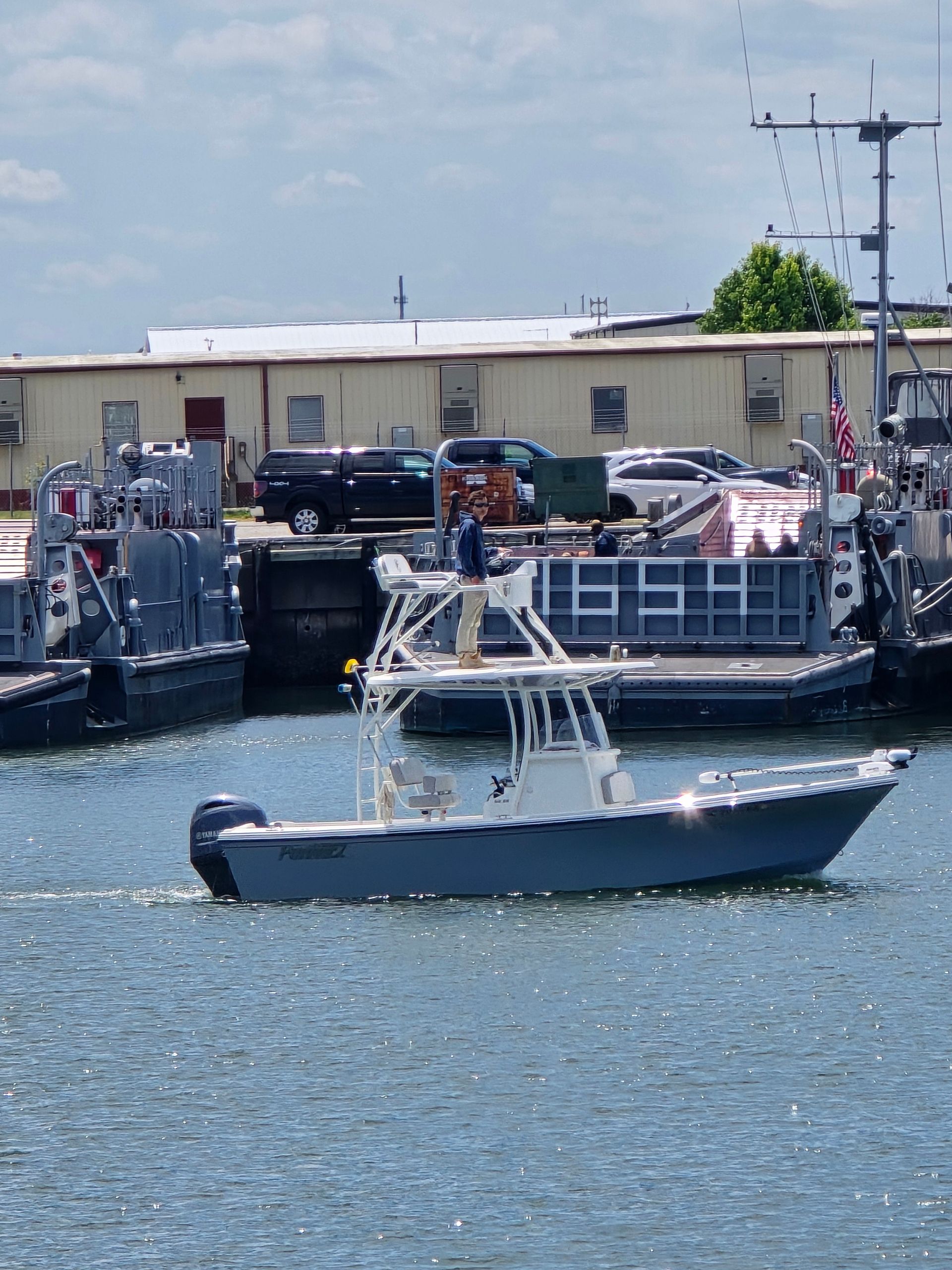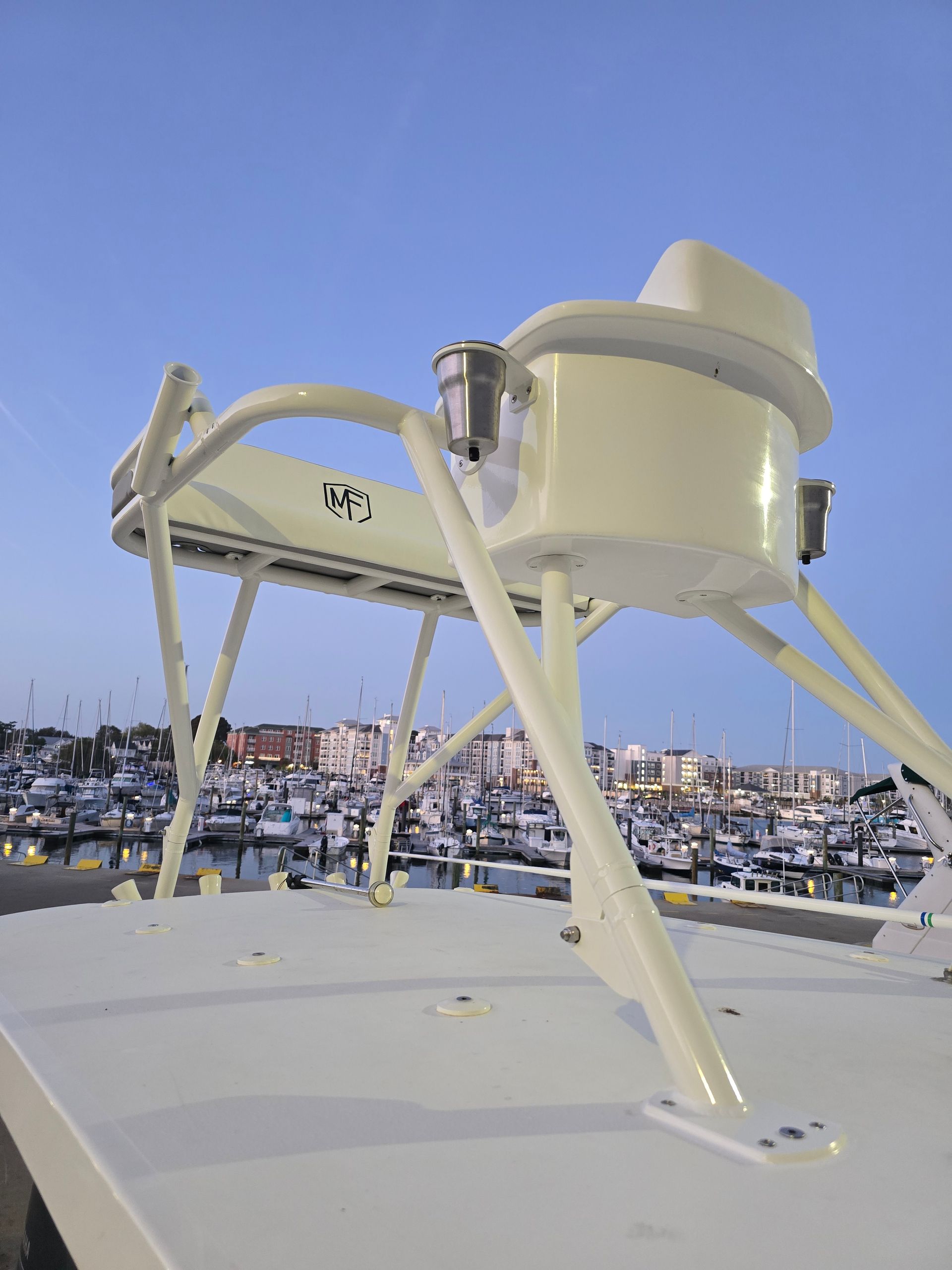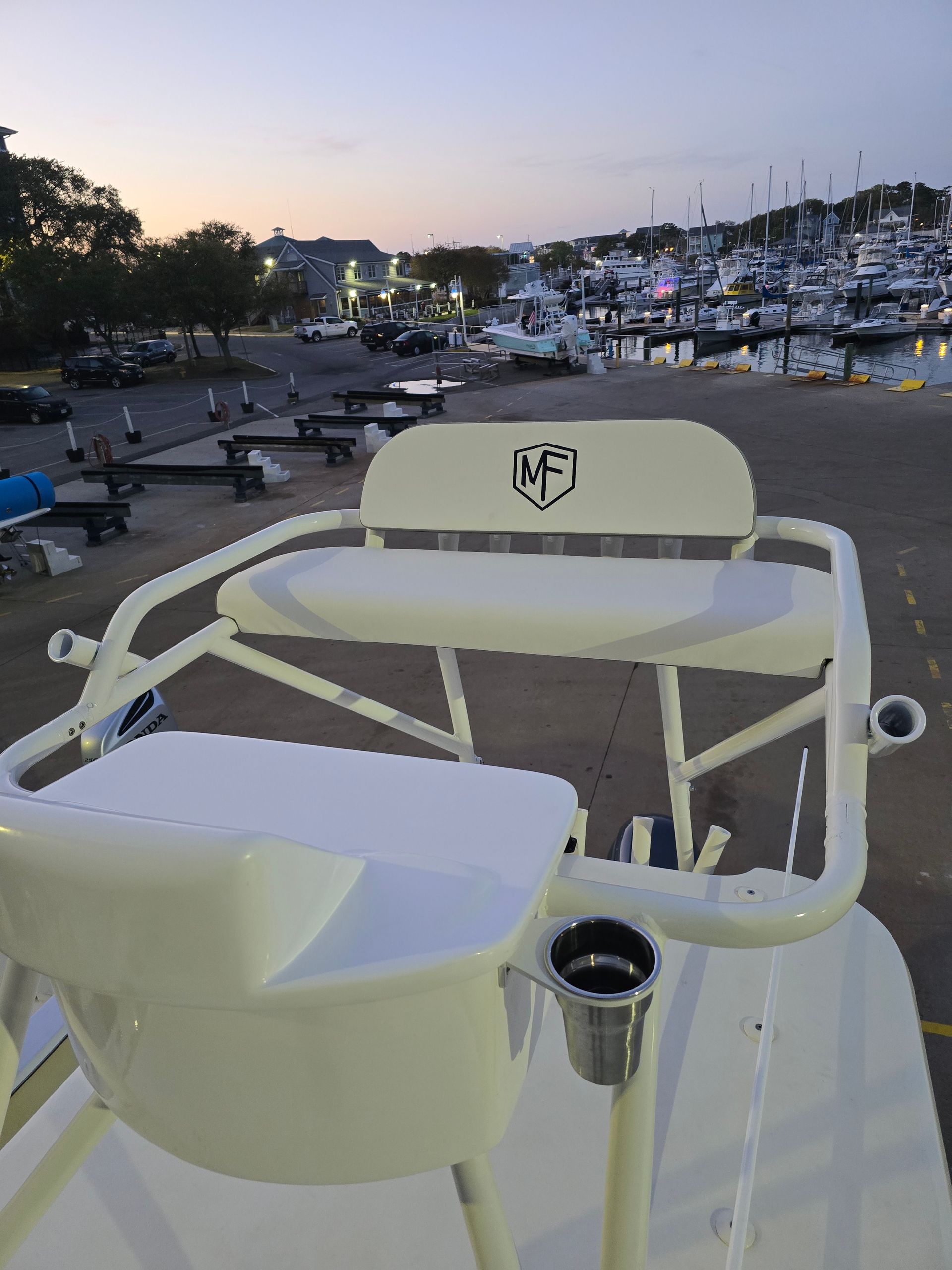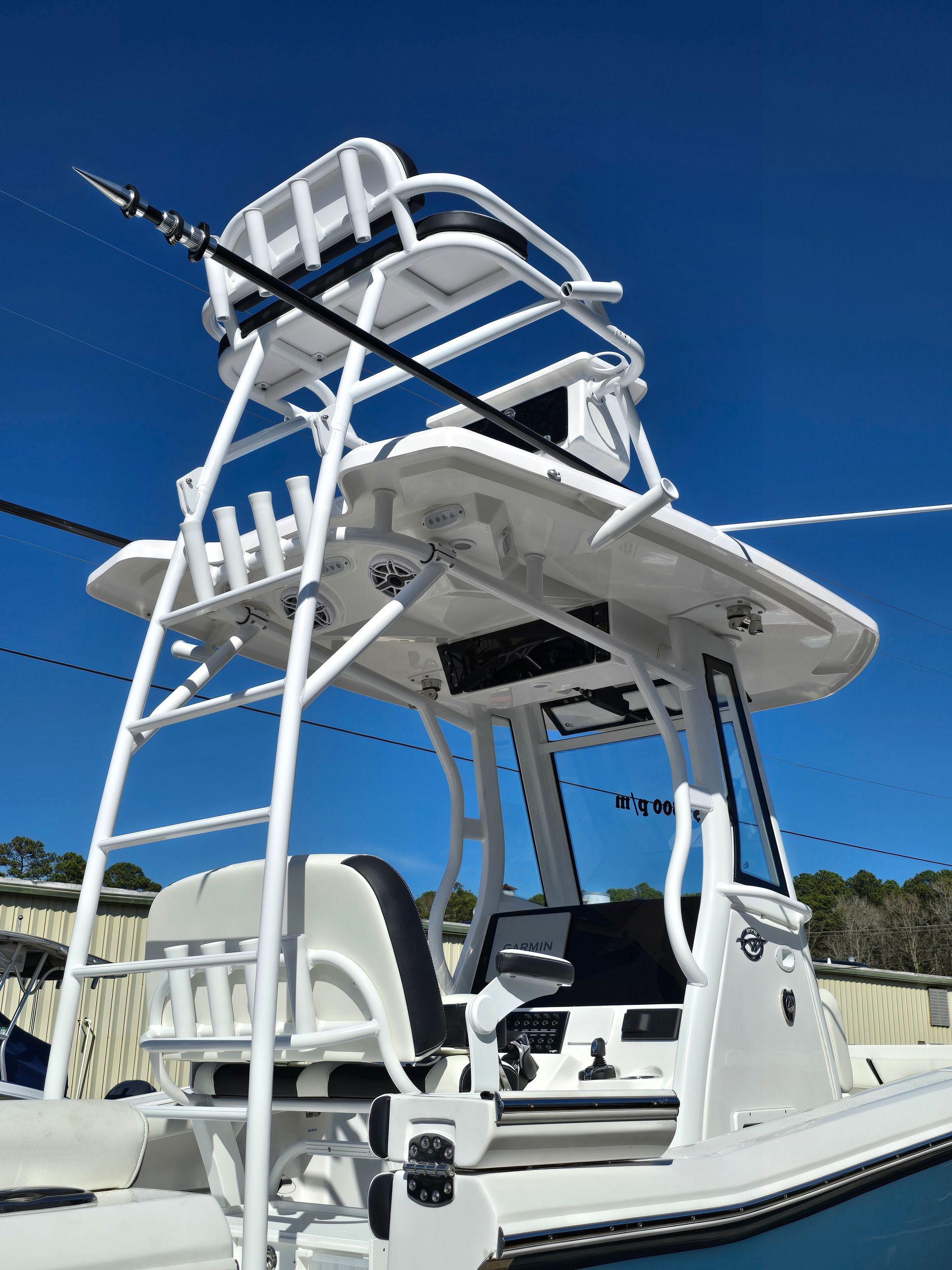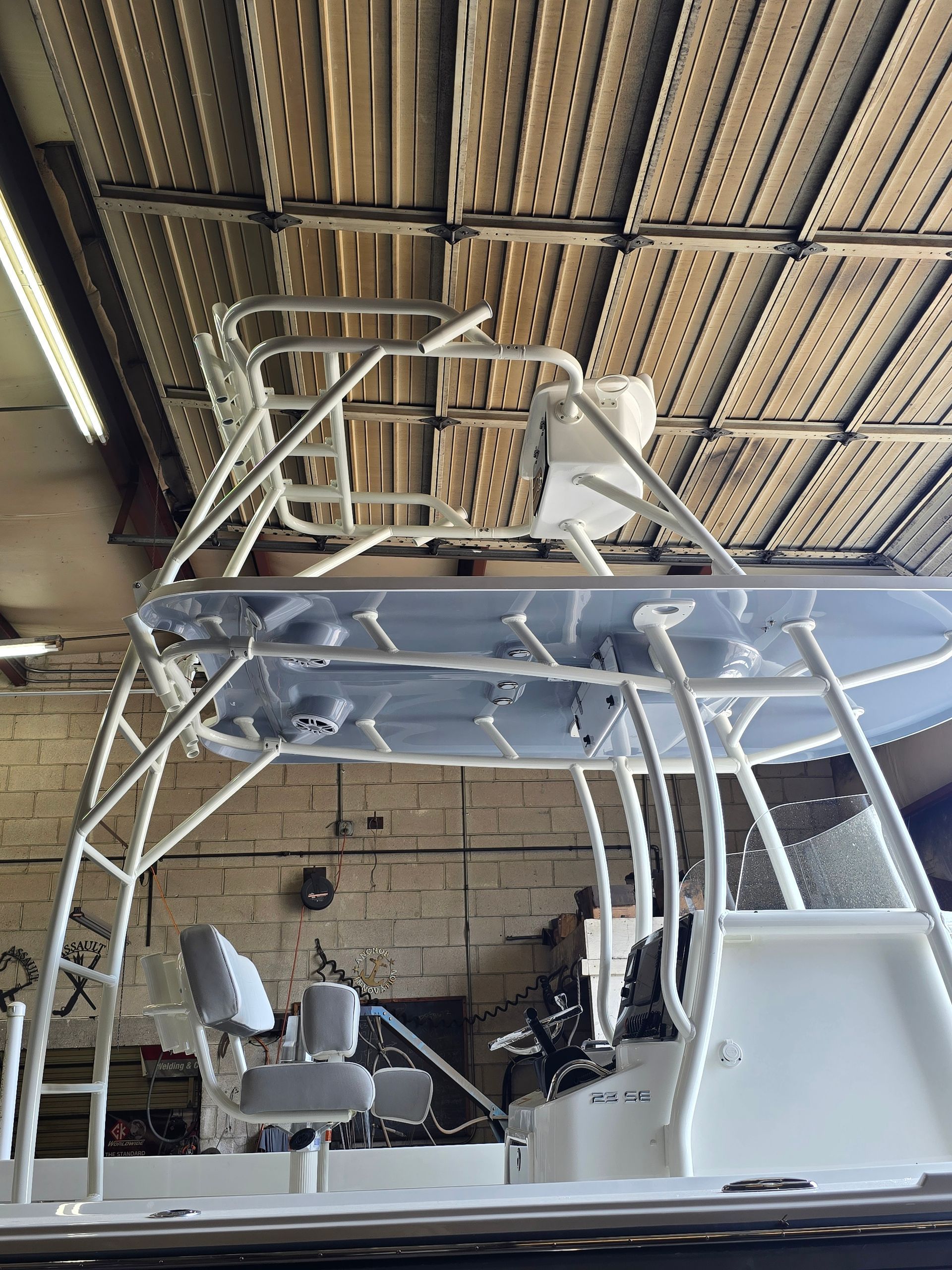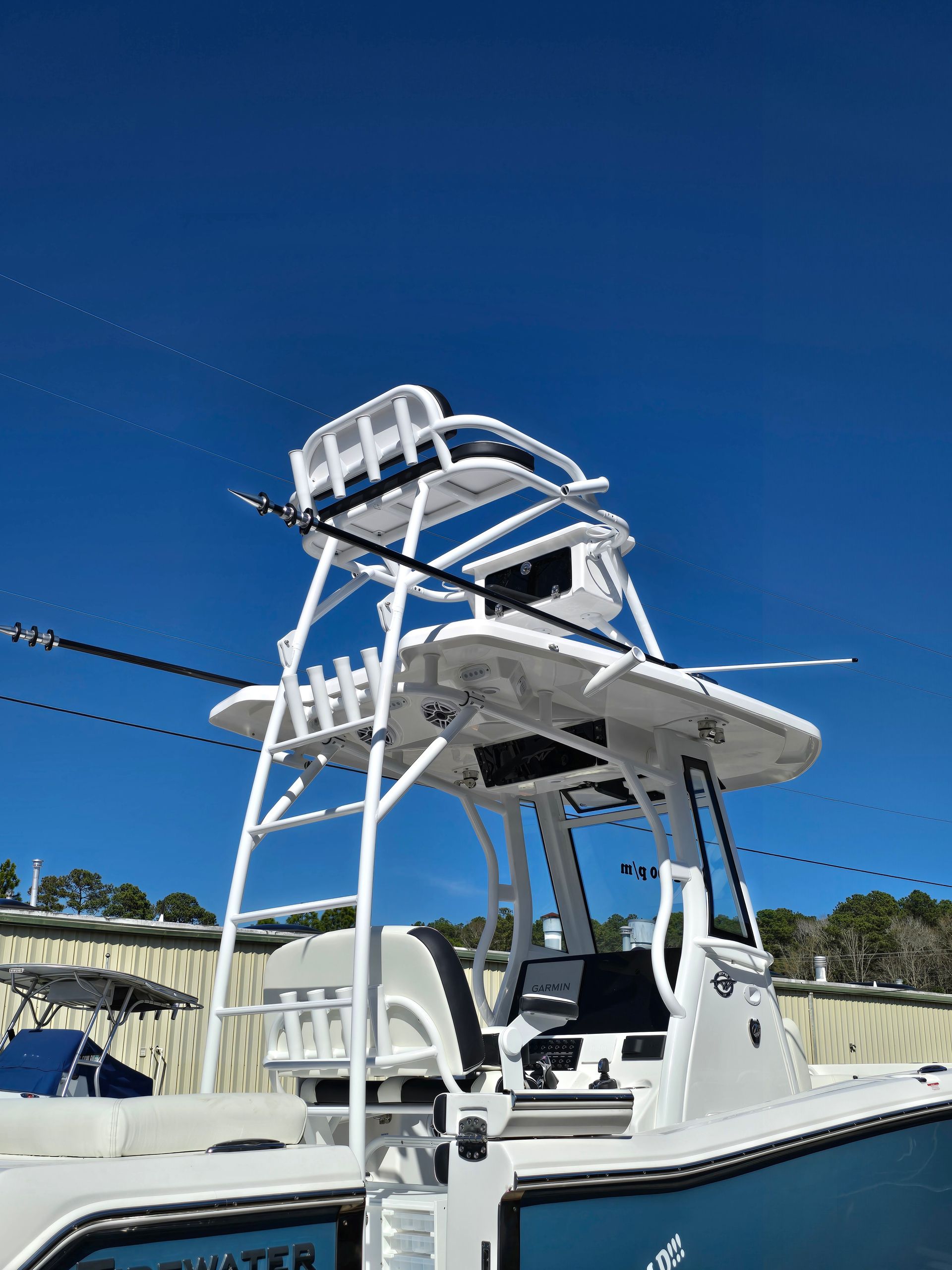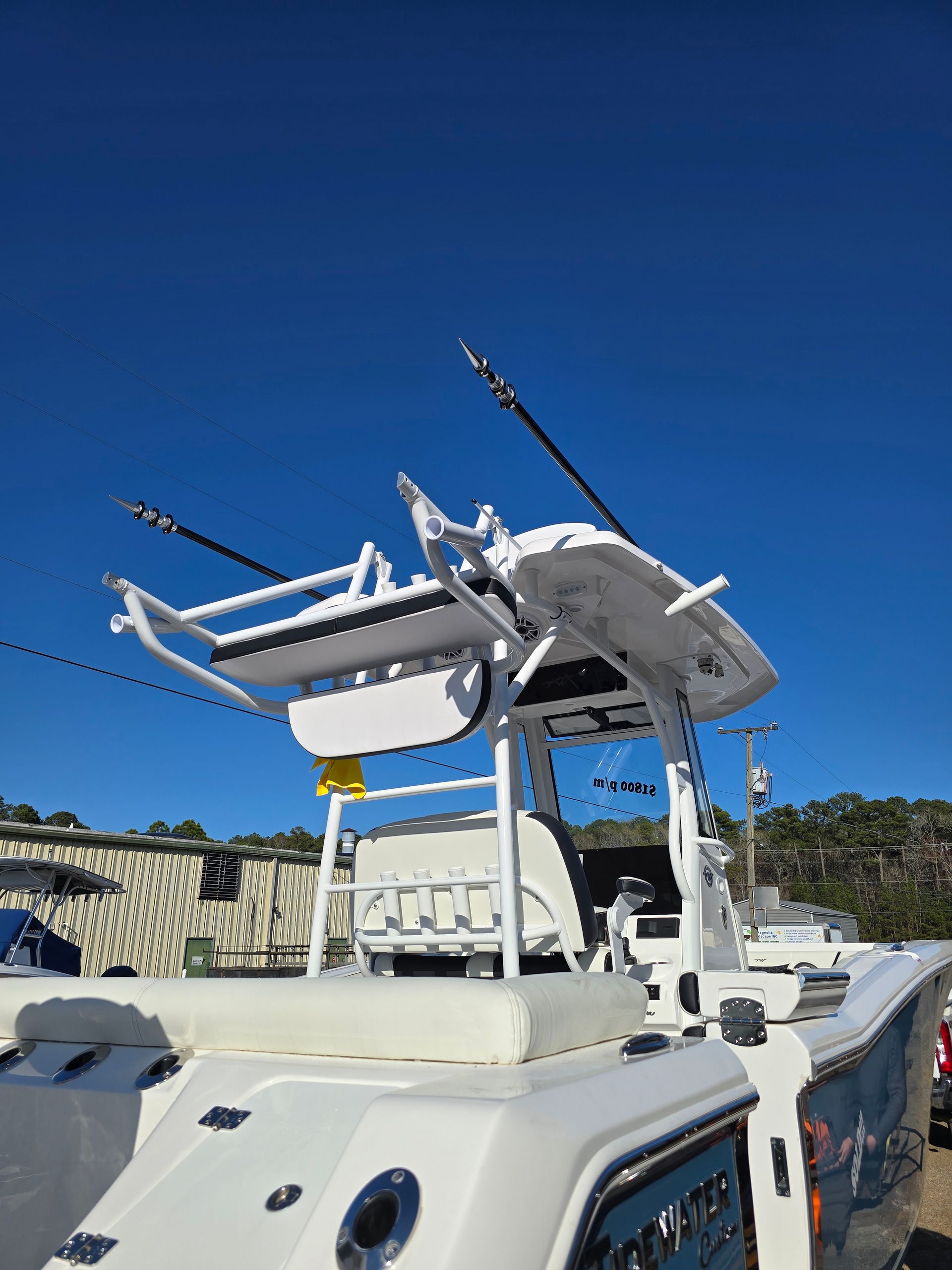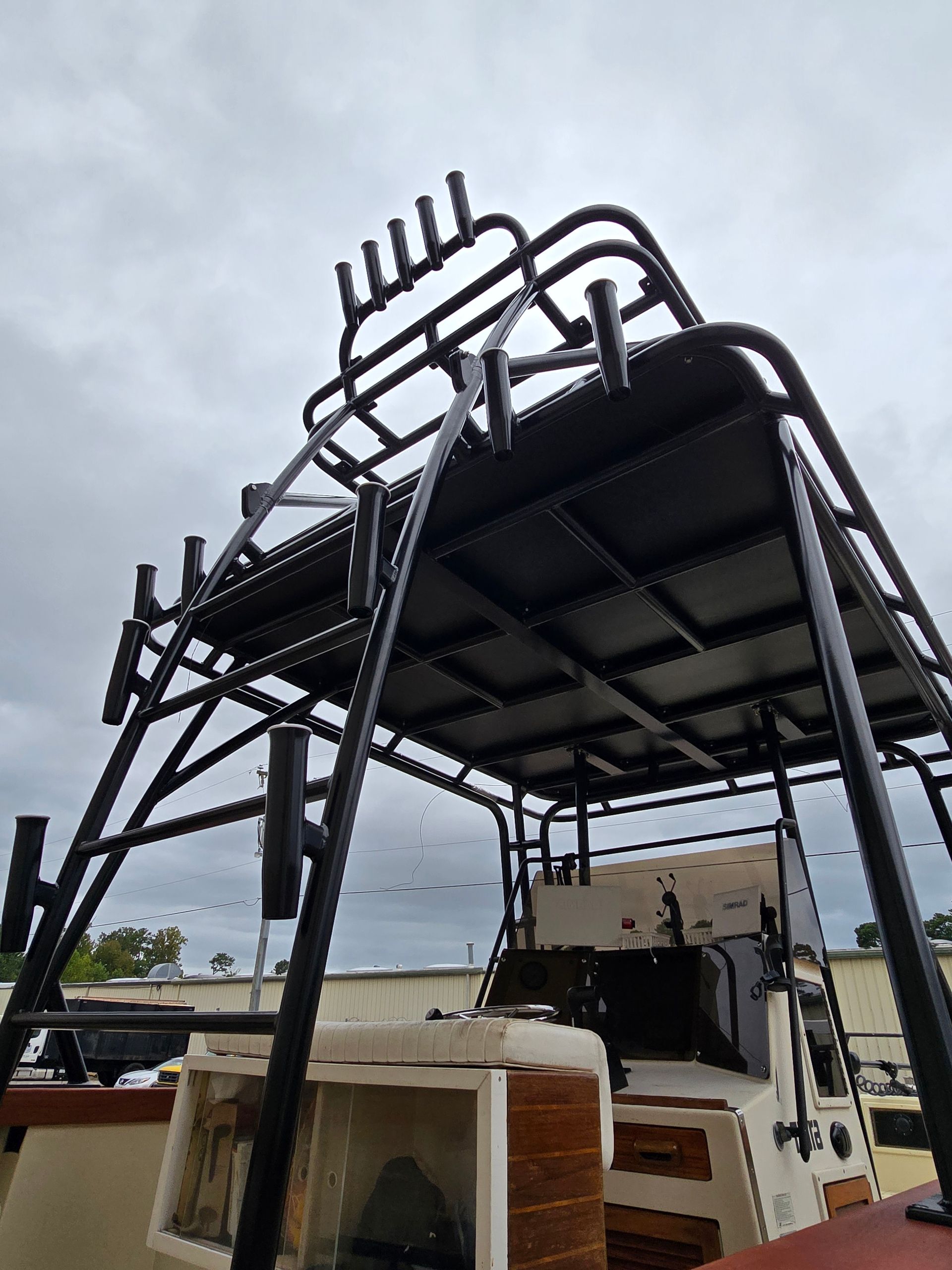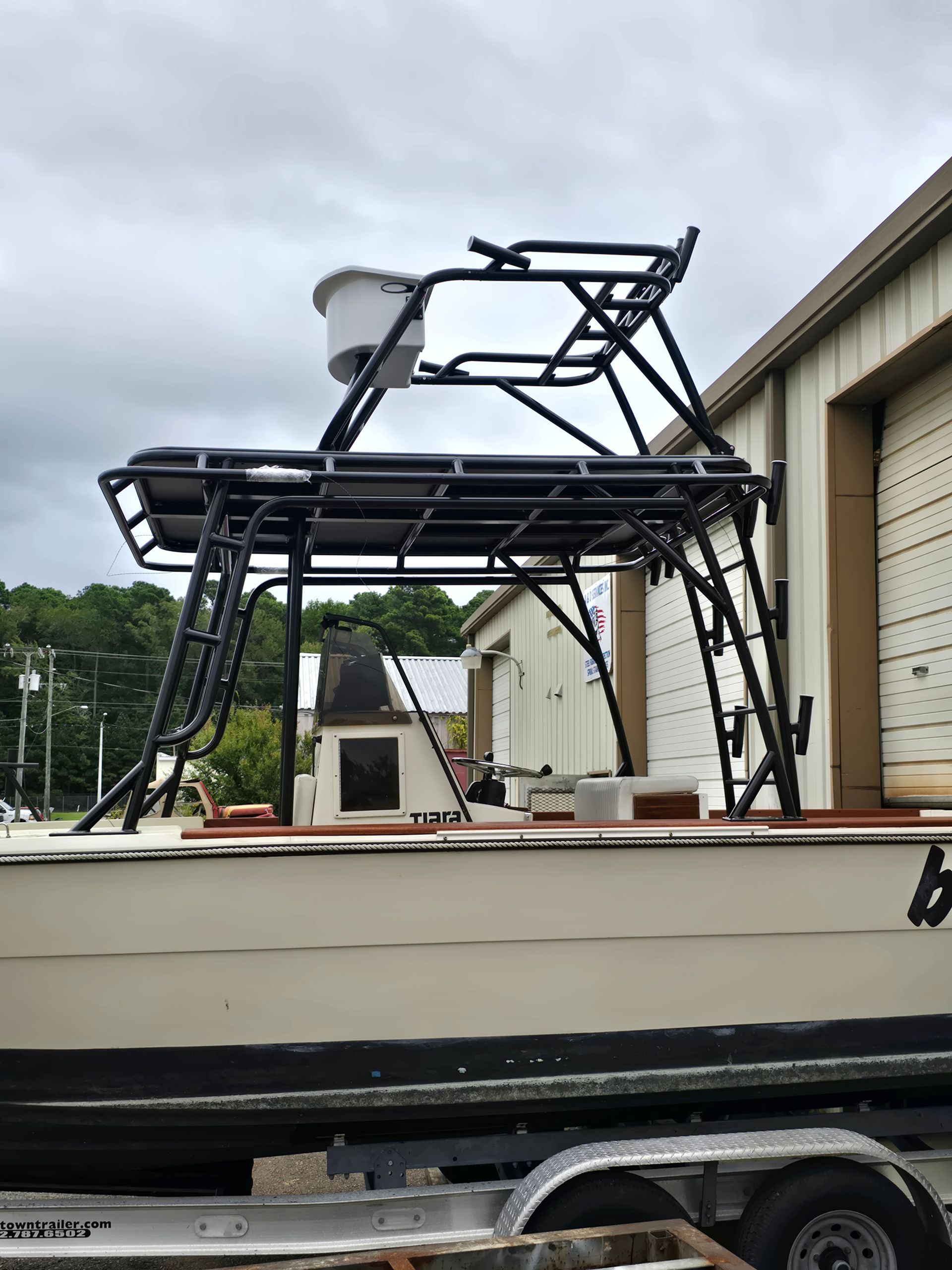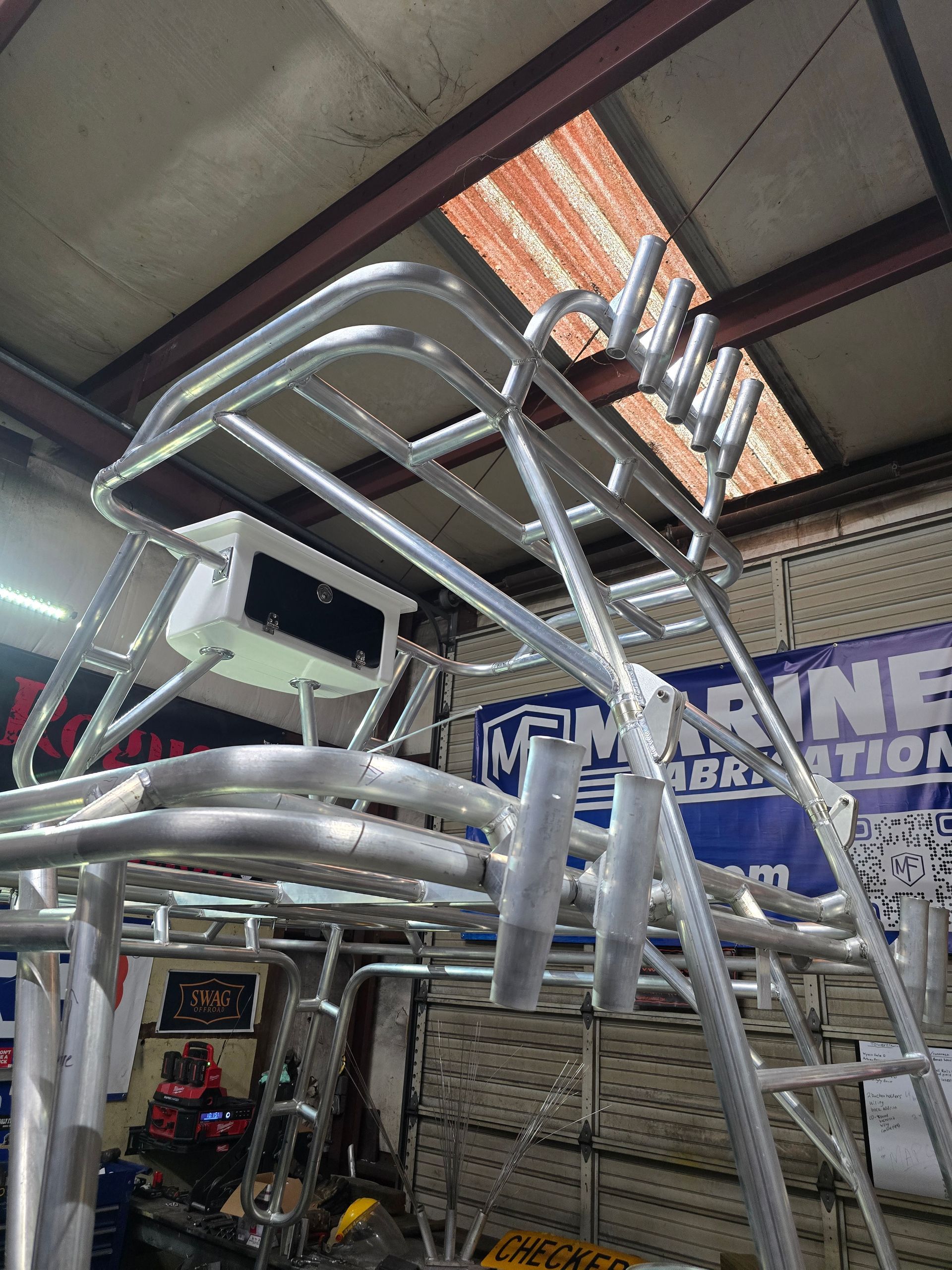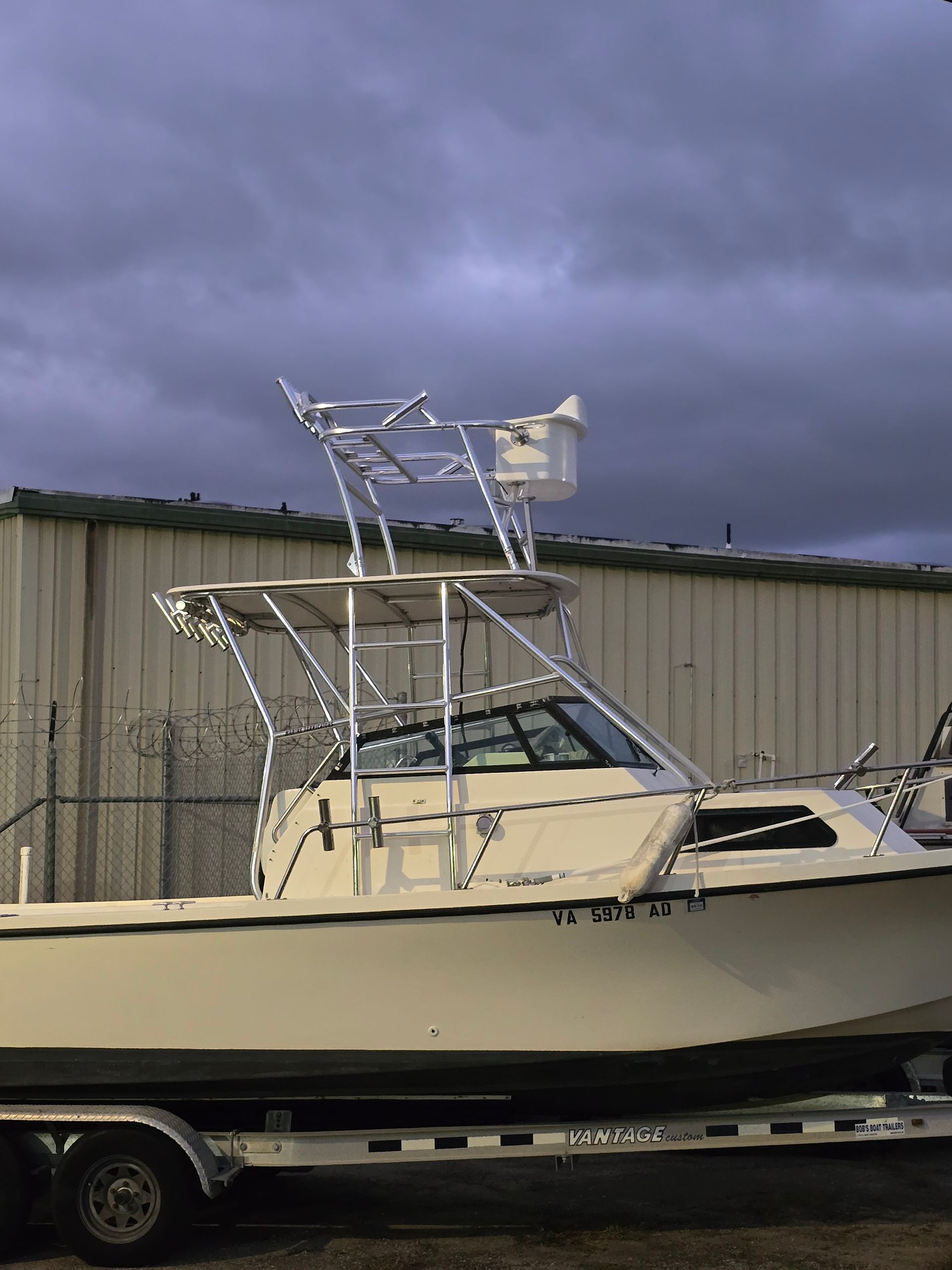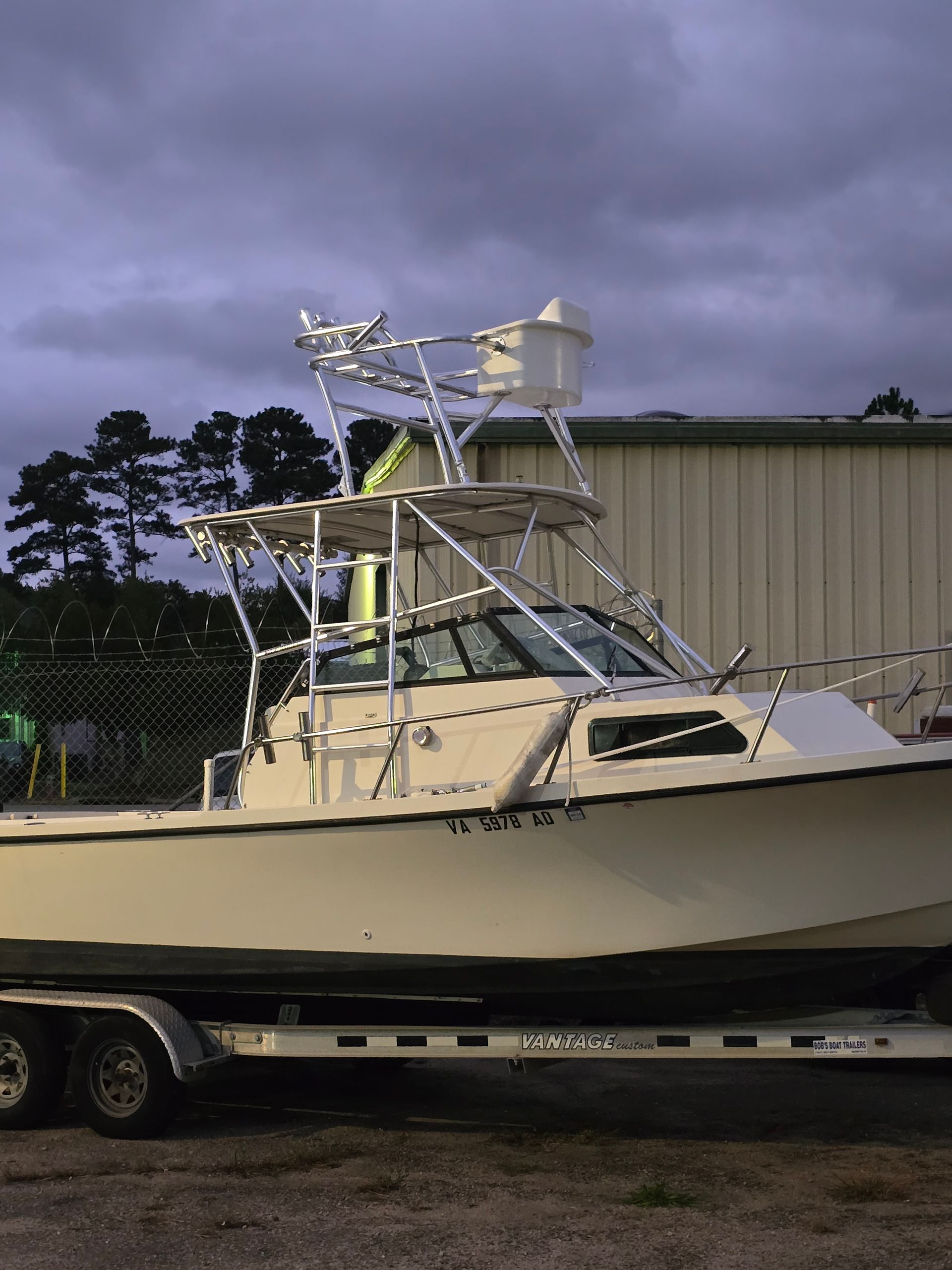
Cobia Fishing Towers in Virginia Beach, Virginia
Custom Cobia Towers Built for Better Visibility
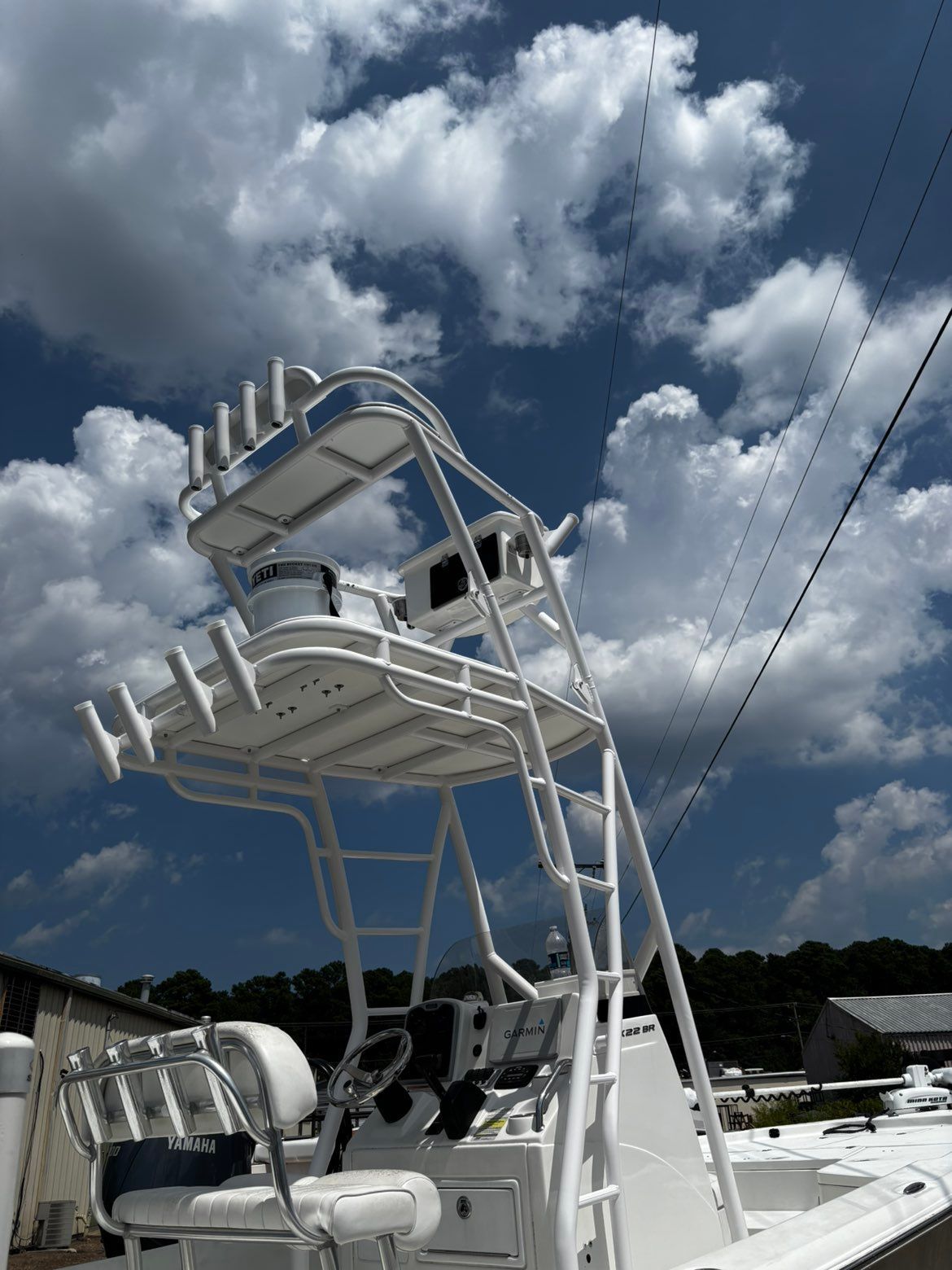
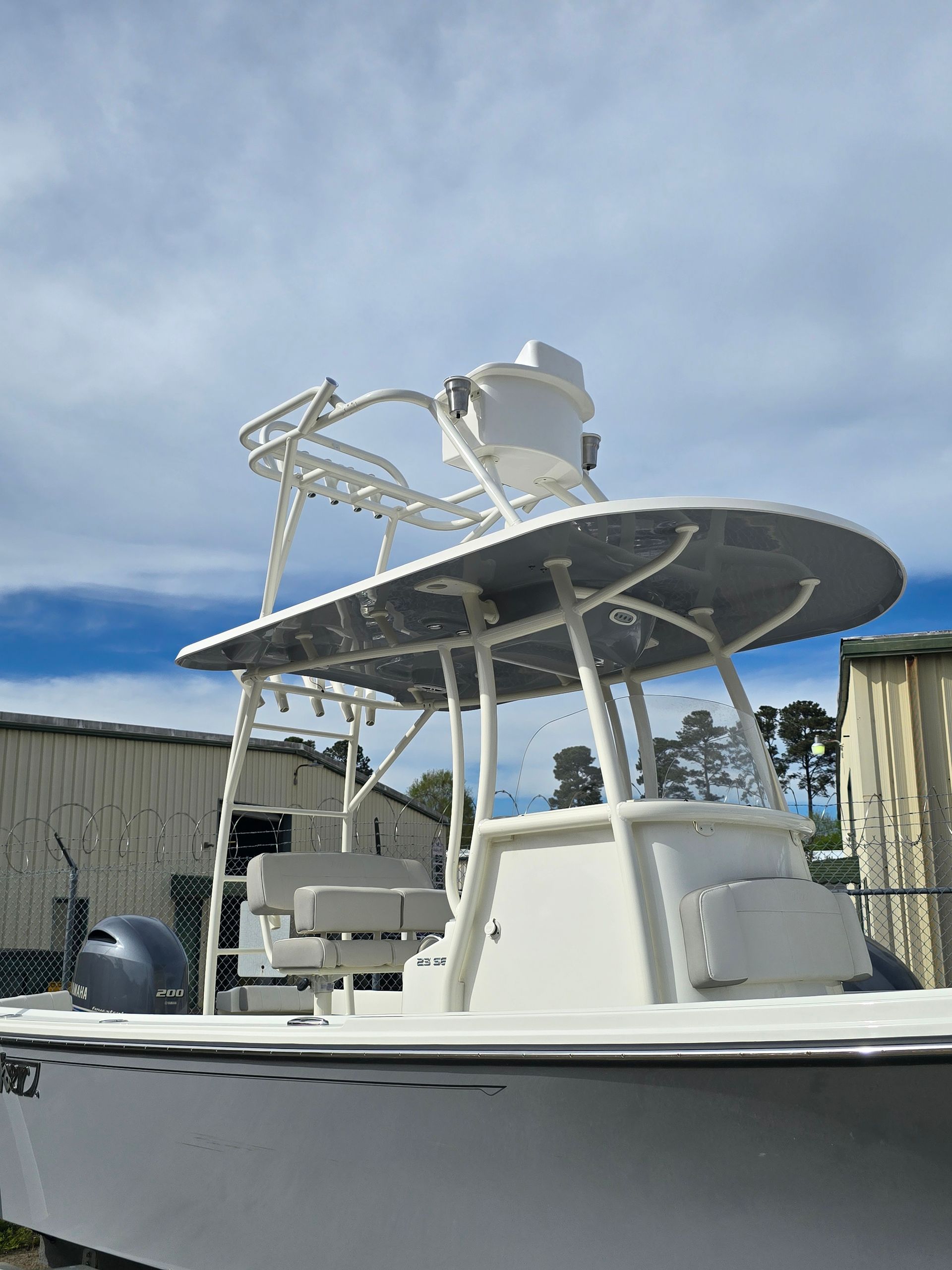
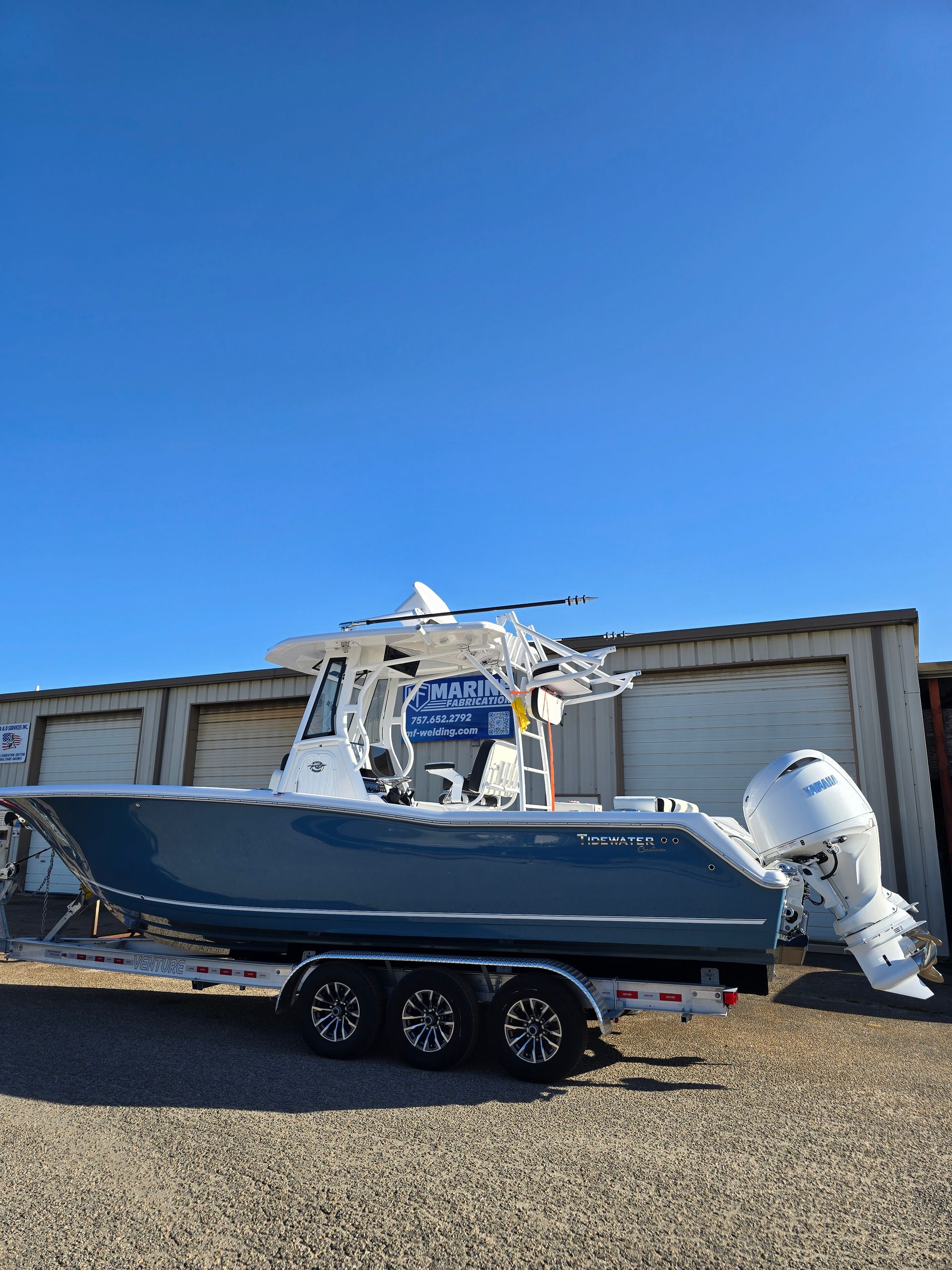
Cobia will not come to you. Sight fishing them means height, patience, and a platform steady enough to trust at idle speed and on plane. This page explains how Marine Fabrication designs and installs Cobia fishing towers for boats working the lower Chesapeake Bay throughout Virginia. Crews from Cape Charles and Poquoson come to us for custom tower fabrication that puts eyes high without turning the boat into something unmanageable.
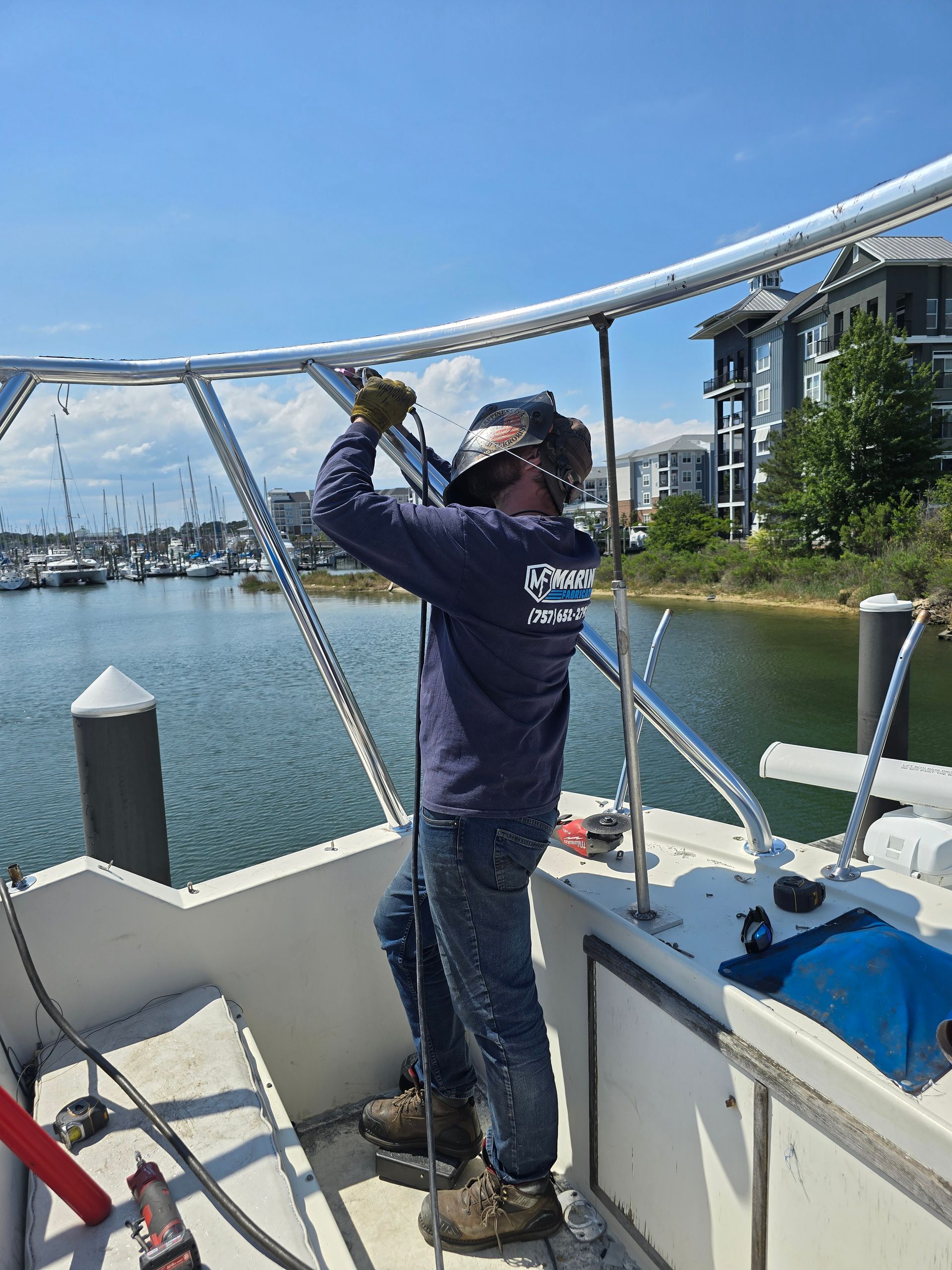
Tower work is unforgiving, because every load ends up in a handful of welds and mounting points. Our 6G TIG certified welders handle those joints, and 20+ years of fabrication informs how we spread load into the deck, stringers, and transom below. We stay owner operated, quote quickly, and schedule around your season instead of ours. Reach out through our contact page and we will start with your hull details and a straight structural assessment.
cobia tower services
Custom Tower Design and Layout
Design starts with how you actually hunt fish. Platform height, ladder angle, rail placement, and sightlines get worked out against your hull dimensions first, because a tower that looks right on paper can feel completely wrong once you are underway.
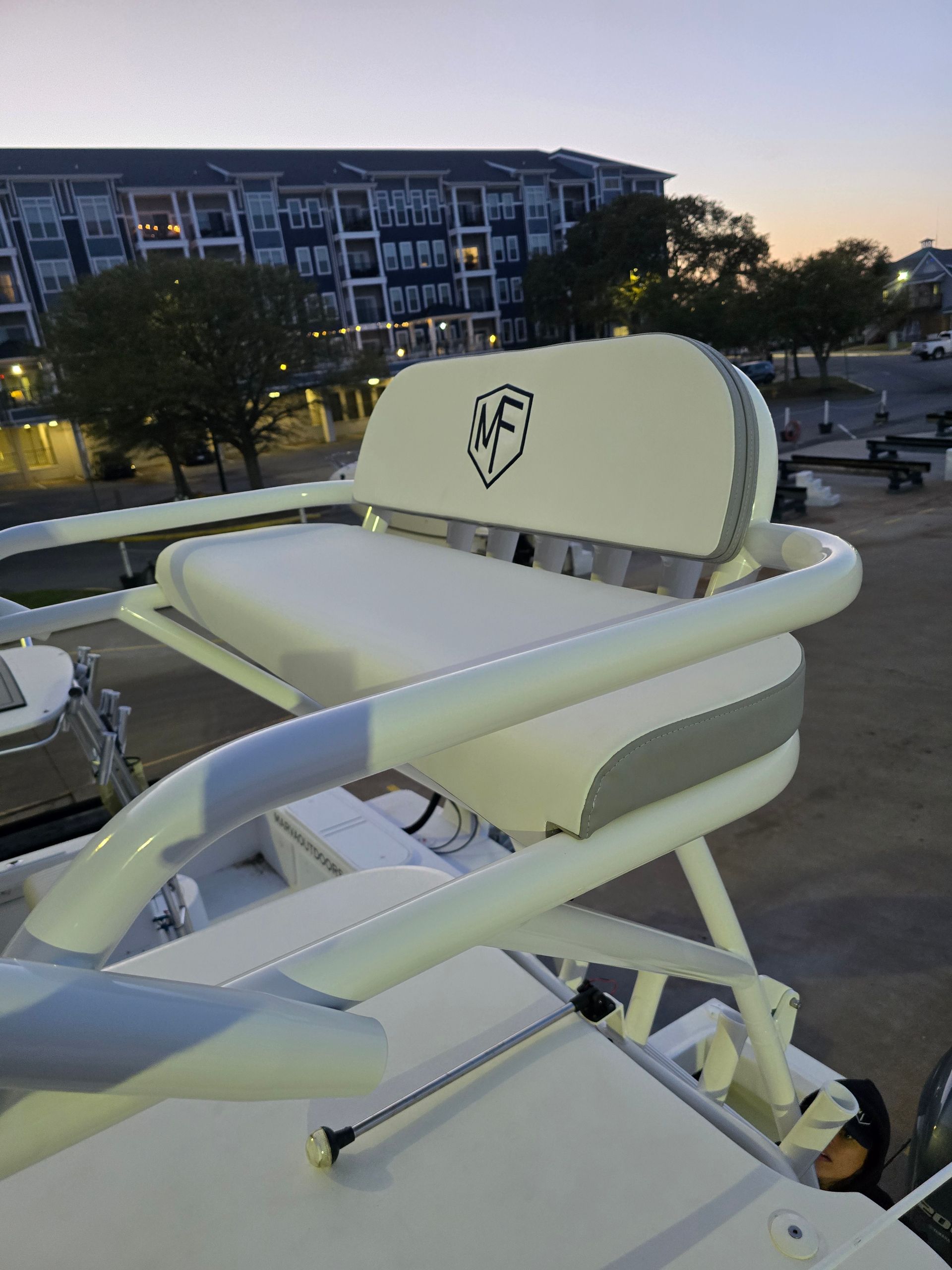
Upper Station Controls and Steering
Running from up top demands controls that respond exactly like the ones below. Throttle, steering, and electronics are positioned within easy reach of the rail, so you can stay locked on a moving fish without looking down at your hands.
Tower Fabrication and Welding
Welding carries the entire structure, so nothing here is rushed. Tube is cut, coped, and fitted tightly before any bead is run, then joints are welded for full penetration and inspected before the finished assembly leaves the shop floor.
Deck Reinforcement and Mounting
Height multiplies force, which is why mounting gets more attention than the visible frame. Backing plates, spreader plates, and reinforcement tied into stringers keep tower loads from concentrating in a small patch of deck that was never designed for it.
Tower Installation and Rigging
Installation day involves far more than bolts. Alignment gets checked against the centerline, cables and wiring are routed inside the tubing, hardware is bedded properly, and the whole assembly is loaded and flexed before anyone calls the job finished.
Tower Repairs, Modifications, and Upgrades
Existing towers often need work rather than replacement. Cracked welds, corroded ladder steps, loose rails, and outdated control setups get repaired or rebuilt, and adding lighting, rod holders, or a shade top is straightforward once the access is properly planned.
How We Approach a Tower Build From First Call to Splash
Hull Assessment and Measurement
Before any design work happens, the boat gets looked at properly. Deck thickness, stringer positions, console structure, and existing hardware all shape what the hull can safely carry, and honest limits get openly discussed with you at that early stage.
Design Review With You
Drawings and dimensions get reviewed together before metal is cut. You see platform height, ladder placement, and rail geometry laid out clearly, and changes at this point cost nothing except a conversation and a revised sketch rather than cut metal.
Material Selection and Cutting
Material choices are made for the job, not for convenience. Wall thickness, alloy, and tube diameter get matched to platform height and expected load, then every single piece is cut and coped for a genuinely tight fit before welding starts.
Welding and Assembly
Assembly happens in a jig so geometry stays true. Joints are welded in sequence to control distortion, which keeps legs parallel, the platform level, and the fully finished tower sitting square on your deck rather than slightly out of true.
Fit Up and Reinforcement
Nothing is finished until the assembly has been sat on the boat. Dry fitting confirms clearance around the console, hardtop, and antennas, and any reinforcement the deck needs gets added while access is still wide open and easy to reach.
Final Rigging and Sea Check
Rich stain paired with a protective sealant is one of the best defenses against weather. We apply both with care, letting the wood grain show through while locking out moisture that would otherwise soak in and slowly break the boards down.
Gain the Height and Control Fishing Demands
The fish you never see are the ones costing you a season, and height is the only honest fix for that. Marine Fabrication builds Cobia towers designed around your hull rather than adapted from someone else's plan. If you have been weighing whether your boat can carry one, an assessment is the sensible first step and commits you to nothing. Send your hull make, model, and a few deck photos through our contact page, and we will tell you plainly what is workable and what is not.
Frequently Asked Questions
What is the difference between a cobia tower and a tuna tower?
Tuna towers sit higher and are built for offshore spotting at distance, often with enclosed upper stations. Cobia towers stay lower and lighter, tuned for bay sight fishing where quick movement, clear downward visibility, and easy ladder access matter most.
Can any boat take a fishing tower, or are there size limits?
Hull size, deck construction, and beam all set the limit. Boats in the low twenties can often carry a light tower, and we assess every hull individually before Marine Fabrication commits to a design.
How much height do you actually need for spotting cobia?
Most sight fishing platforms land somewhere between eight and twelve feet above the water, depending on hull freeboard. Going higher improves how far you can see into the water column but costs stability and makes the ladder climb noticeably harder.
Does a tower affect stability and fuel burn?
Any added height raises the center of gravity, so roll becomes more noticeable at rest. Weight is kept minimal through alloy and wall thickness selection, and most owners find the tradeoff worthwhile once they see fish they previously missed entirely.
How long does a tower build and installation take?
Tower projects generally take four to eight weeks, since design, fabrication, finishing, and rigging each need proper time. Scheduling stays flexible at Marine Fabrication, and 20+ years of tower work keeps surprises to a real minimum.
Can a tower be lowered or removed for bridges and storage?
Folding and removable designs are possible when bridge clearance or storage demands it. Hinged legs, quick release pins, and telescoping sections all exist, though each adds complexity, so the final choice depends on how often you genuinely need it lowered.
What upper station controls are typically included?
Standard upper stations include steering, throttle control, and a kill switch, with many owners adding a repeater display, VHF, and lighting. Placement gets carefully matched to your height and stance so nothing requires stretching or looking away from the water.
How do you keep a tower from corroding at the mounting points?
Corrosion starts where dissimilar metals meet and where water sits. Isolating hardware, bedding every fastener, and sealing penetrations properly prevents most of it, and rinsing mounting areas after saltwater trips handles the rest without much effort from you at all.