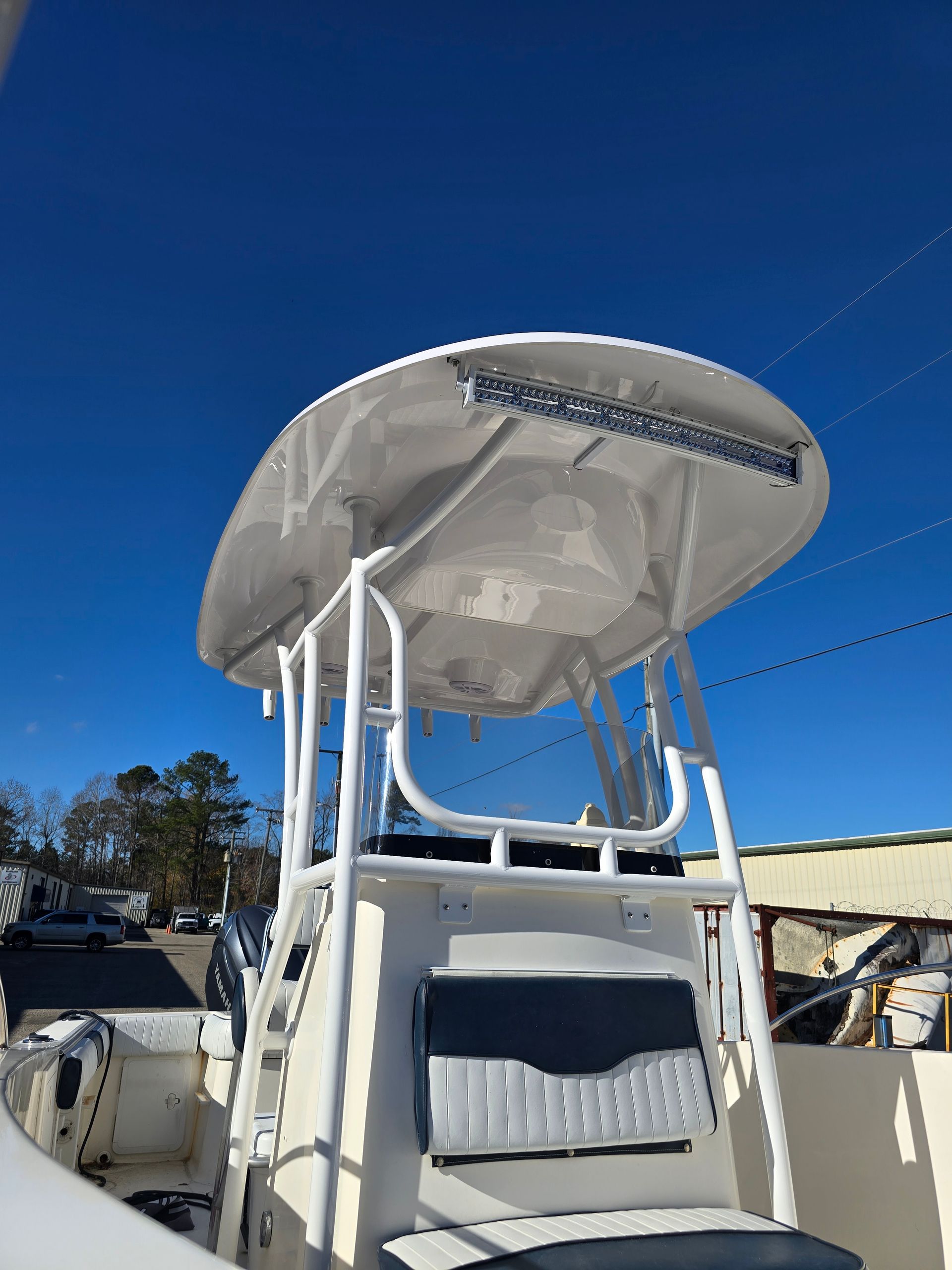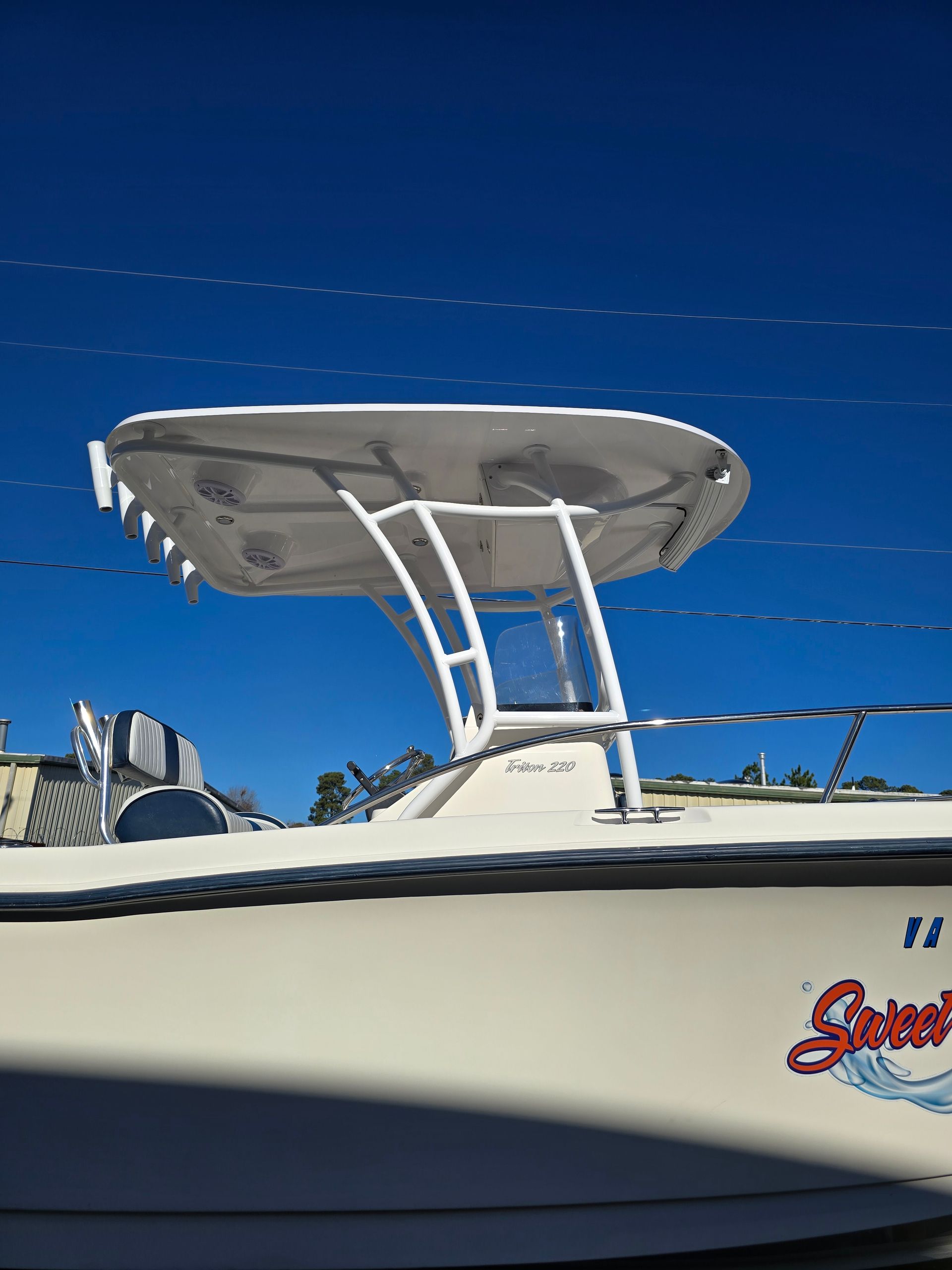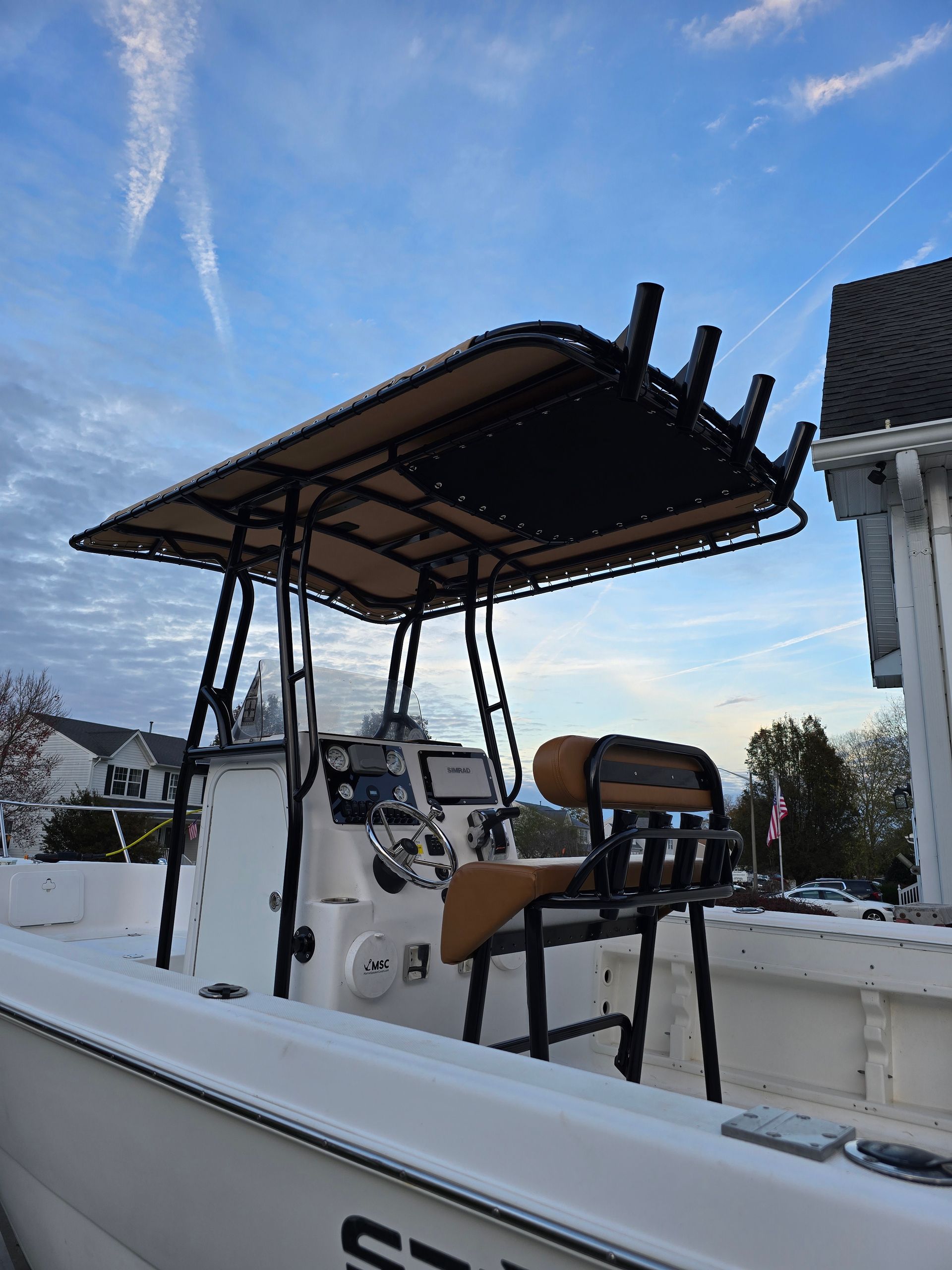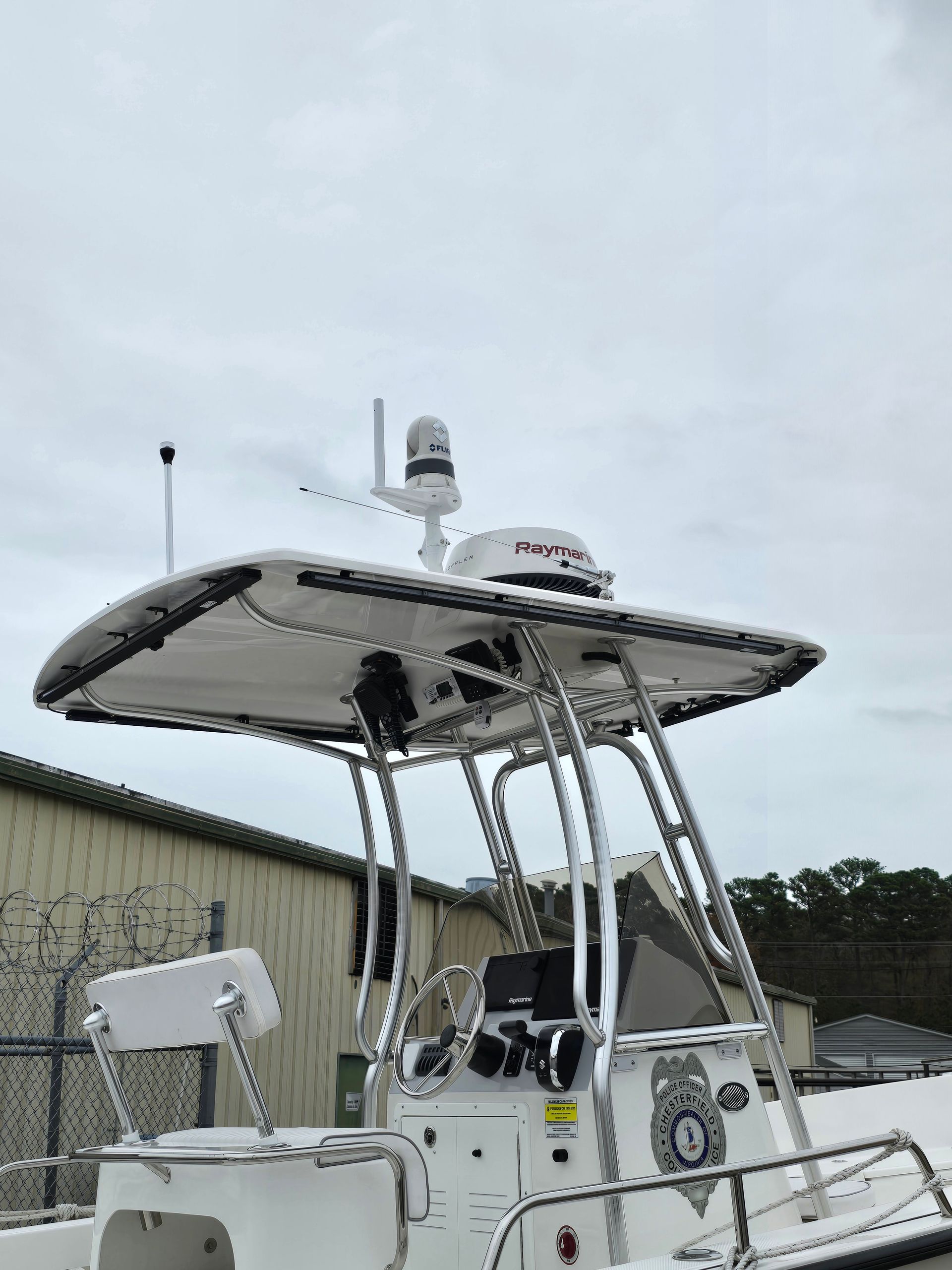
Custom Marine T-Top in Virginia Beach, Virginia
Upgrade Your Boat With Lasting Overhead Protection
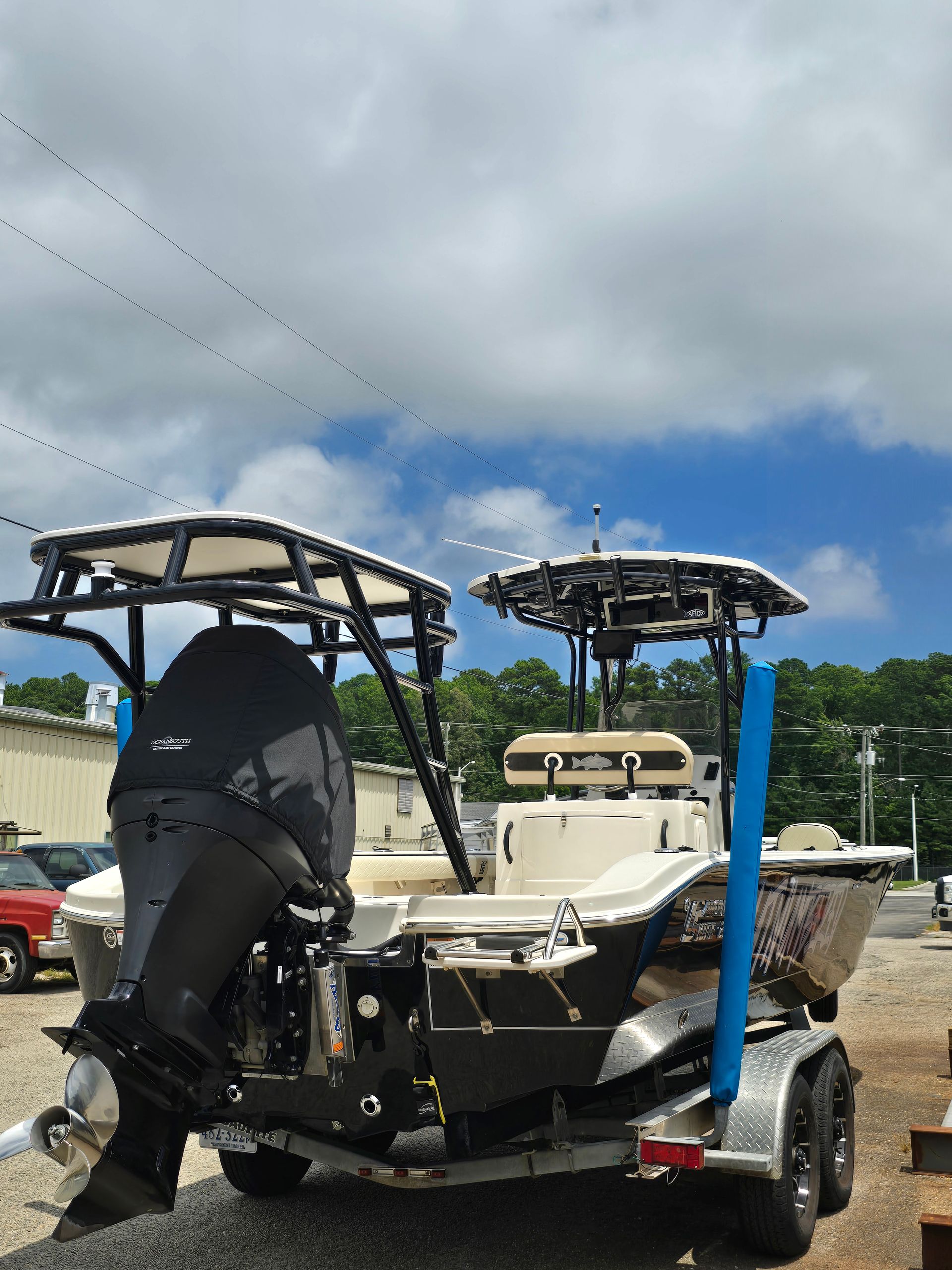
Sun exposure and sudden squalls change how a day on the water ends. At Marine Fabrication, custom marine T-tops are built to solve exactly that, and this page walks through how we design, weld, and fit them for boats running throughout Virginia. Owners in Norfolk and Chesapeake bring us center consoles, bay boats, and skiffs needing marine aluminum T-top fabrication that fits the deck instead of forcing the deck to fit.
Our work carries 20+ years of hands on marine welding behind it, along with 6G TIG certified welding on every structural joint. We stay owner operated on purpose, so you talk directly with the person cutting and welding your frame, and you get a straight quote quickly. Scheduling flexes around your fishing season rather than around ours. Send your boat details through our contact page and we will start the design conversation this week.
What Our Custom Marine T-Top Services Covers
Center Console T-Top Fabrication
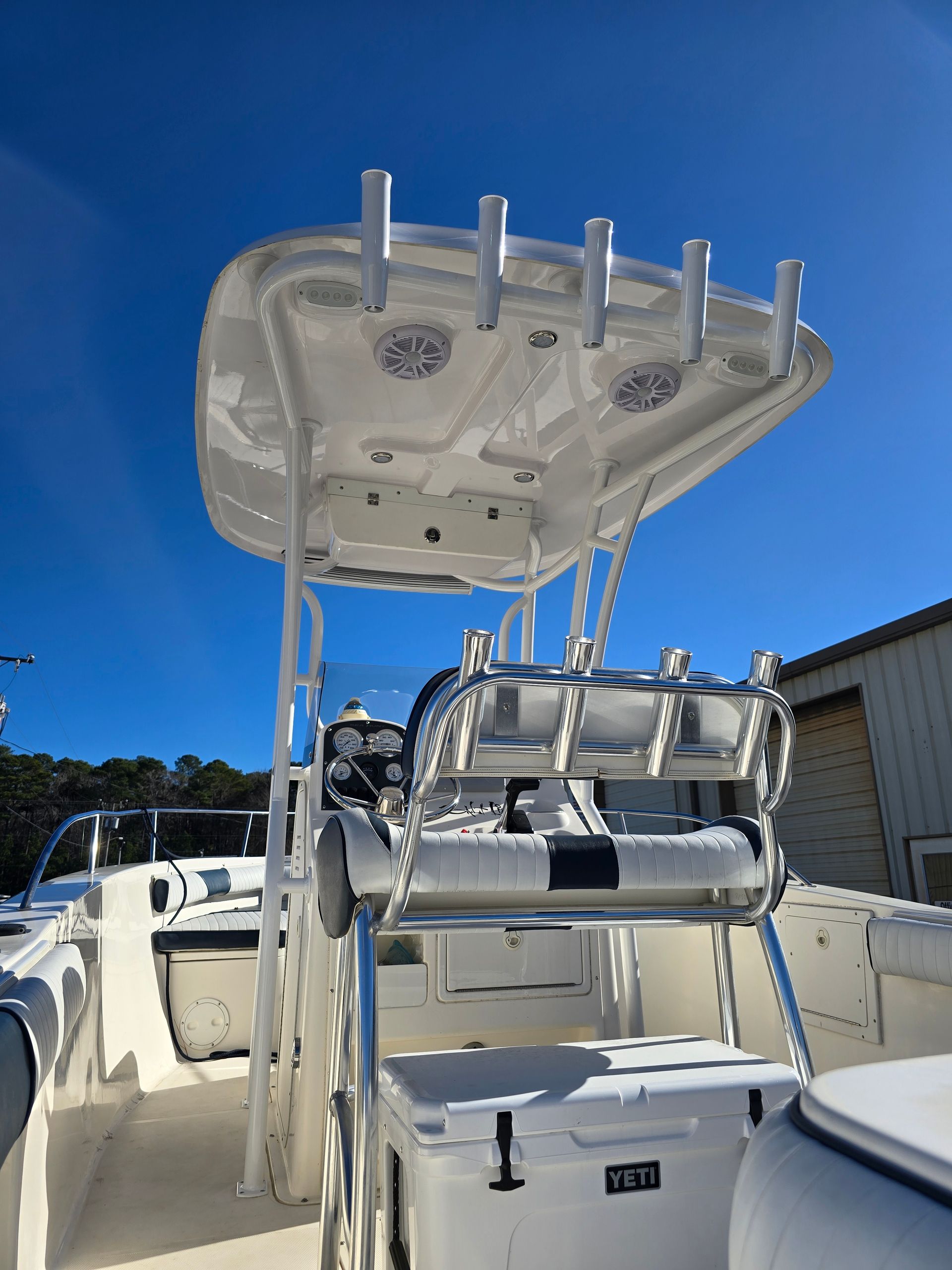
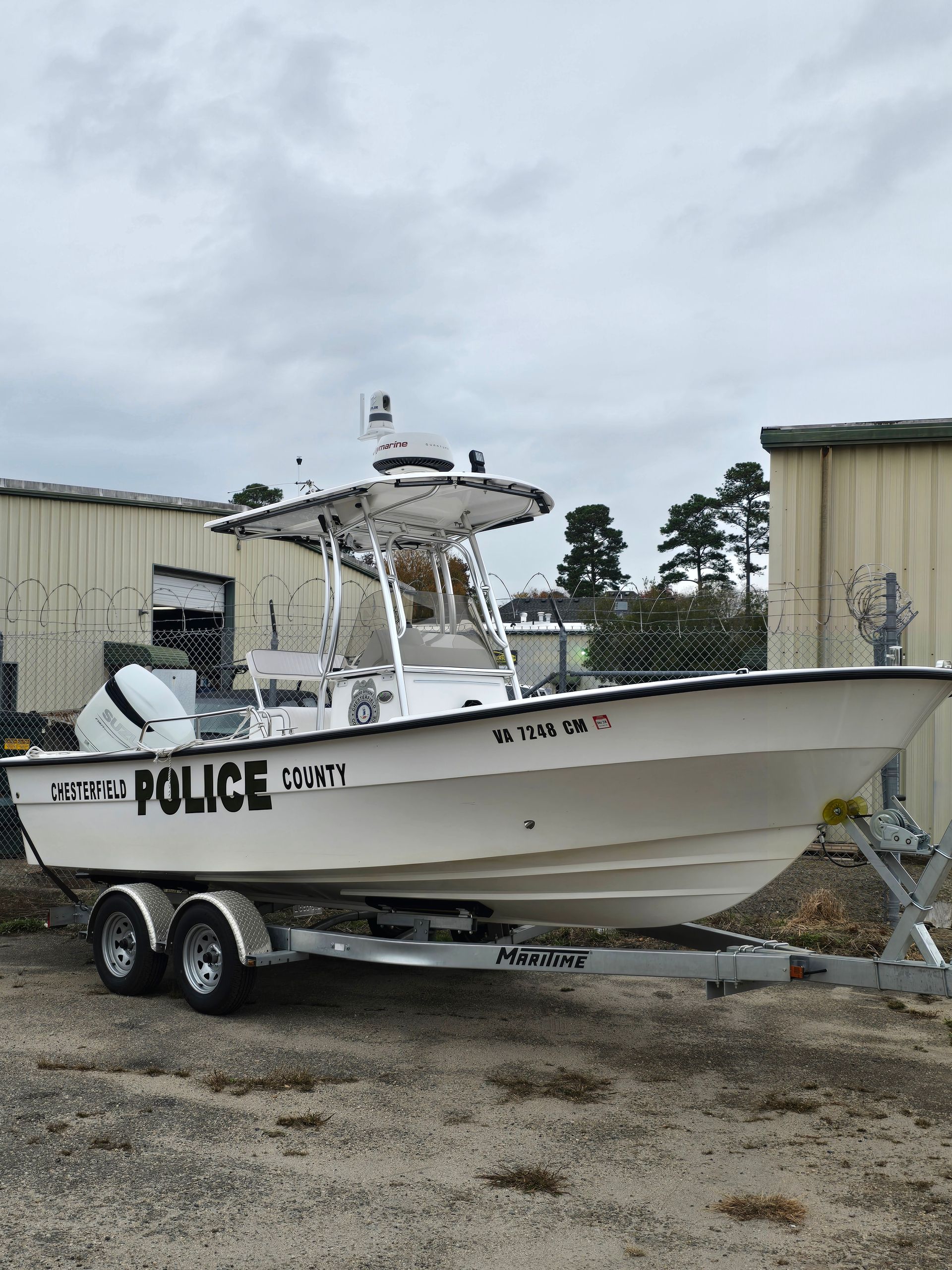
Center consoles carry the widest range of layouts, so we measure your console, gunwale height, and walkway clearance before bending a single tube. The finished frame lands square, sheds spray forward, and leaves your casting lanes open and fully usable.
Bay Boat and Skiff T-Top Builds
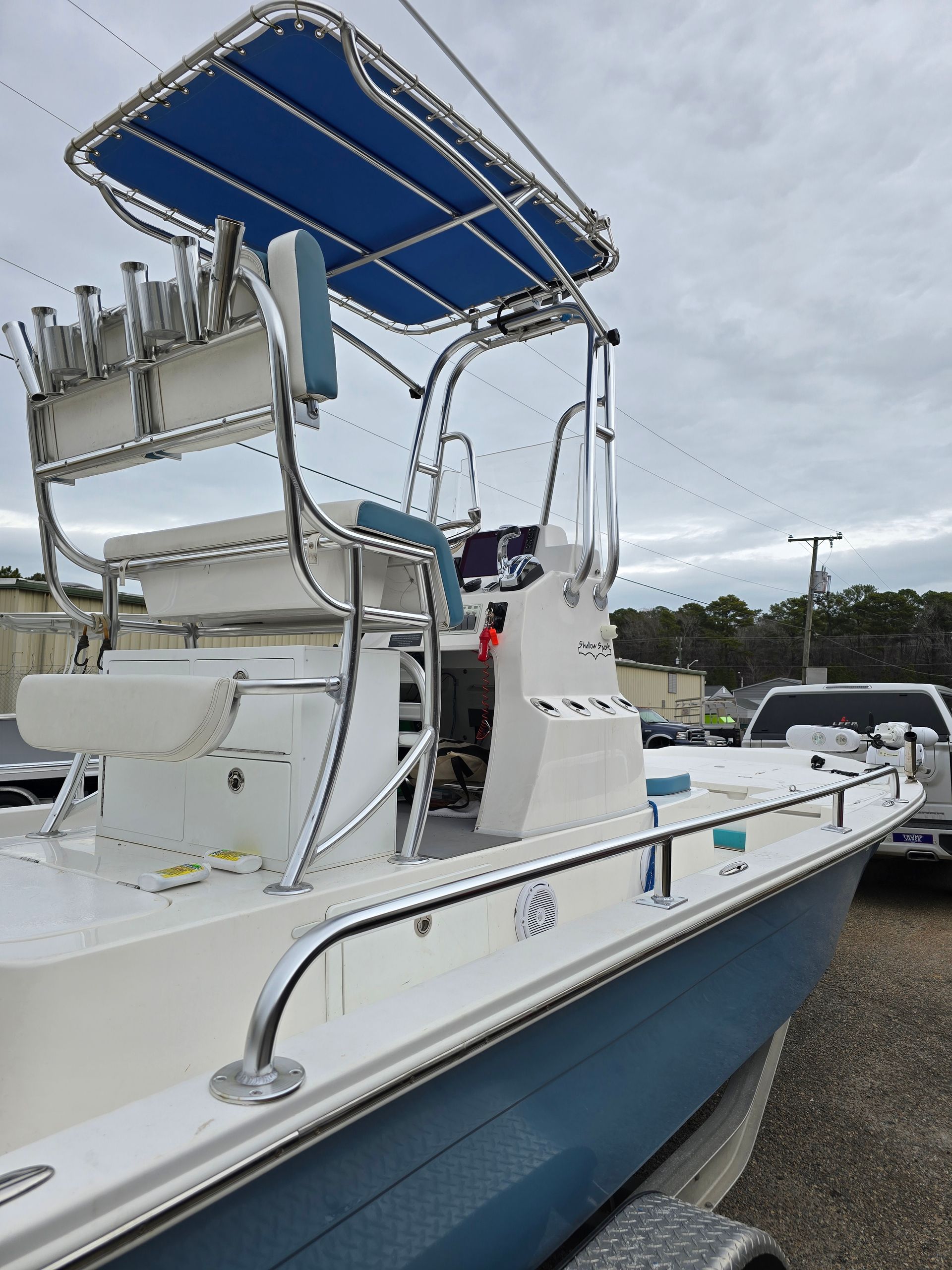
Shallow water boats need light structure that does not upset balance or draft. We use smaller diameter tubing and tighter geometry, keeping weight down while still giving you shade, a solid grab point, and mounting room for lights and antennas.
Electronics Boxes and Rod Launchers
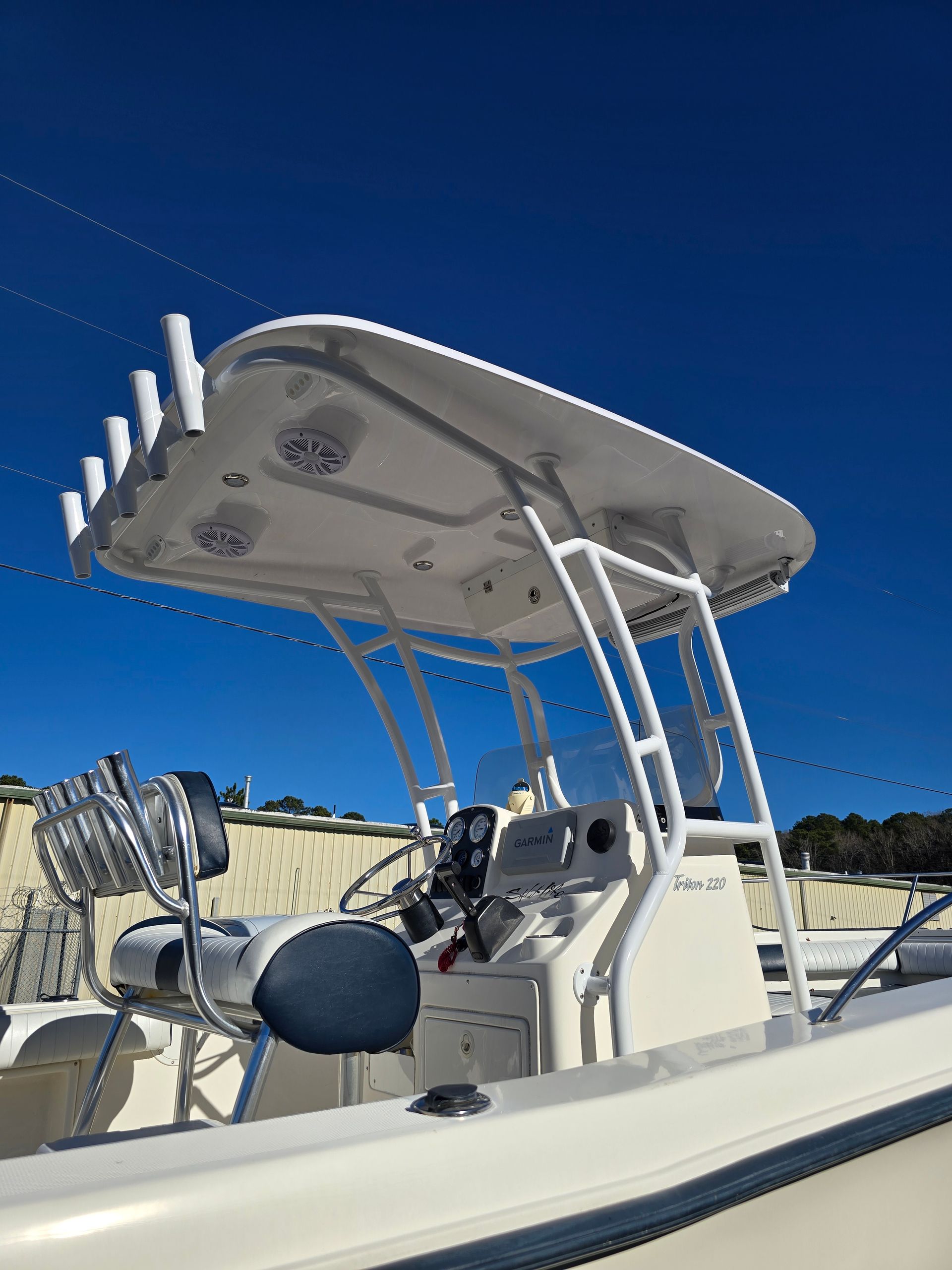
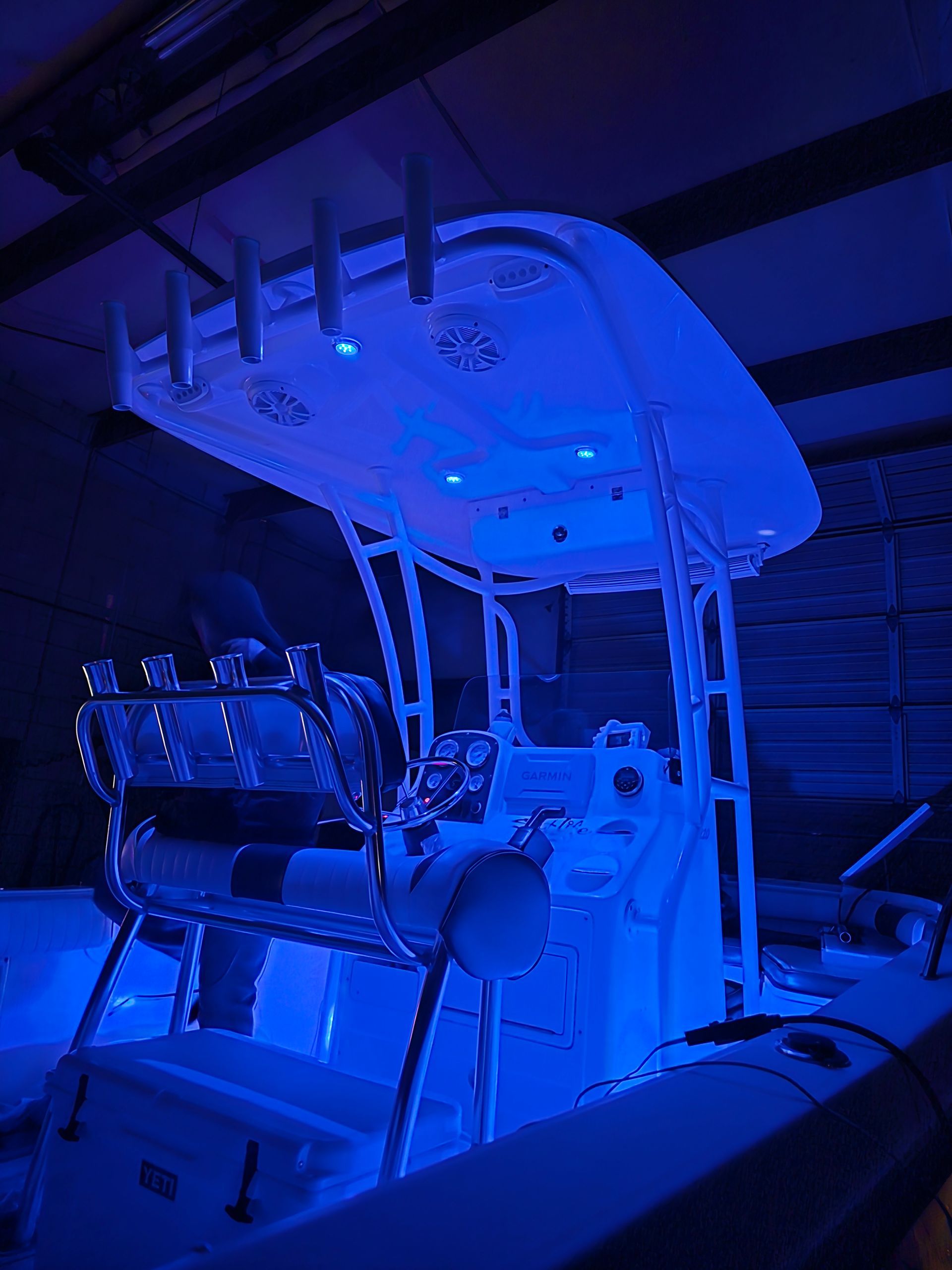
Overhead storage keeps expensive gear dry, protected, and within reach. We fabricate sealed electronics boxes sized to your display, then weld rod launchers across the aft frame so rods sit angled, secure, and clear of everyone working the deck below.
Powder Coated and Polished Finishes
Finish choice affects both looks and longevity. Polished aluminum gives a bright traditional look, while powder coating adds a thicker barrier against salt and ultraviolet exposure. Either way, every surface gets prepped and etched properly first so the coating bonds.
T-Top Repairs, Reinforcement, and Retrofits
Not every top needs replacing. Cracked welds, loose mounts, and flexing legs usually respond to targeted repair and added gusseting. We assess the existing structure honestly and tell you when rebuilding makes more sense than patching a tired frame again.
Hard Top and Canvas Ready Conversions
Some owners want fabric shade, others want a solid roof overhead. We build frames either way, including welded perimeter tracks for canvas or full aluminum hard tops with drip edges that push water off the back rather than onto you.
How We Build T-Tops That Hold Up in Salt Water
Marine Grade Aluminum Tubing
You get tubing selected for saltwater service rather than whatever is cheapest on the rack. Marine alloys resist pitting and hold strength after welding, which means your frame stays rigid instead of softening around the joints within a few seasons.
Full Penetration Welded Joints
Welds that only skim the surface look fine until load finds them. Ours are run for full penetration and left visible so you can inspect the bead yourself, which is the simplest honesty check available on any fabricated aluminum frame.
Deck Backing and Load Spreading
Mounting feet concentrate force into a small footprint, and thin deck coring rarely takes that well. Backing plates spread the load across a wider area, protecting your fiberglass from stress cracks that appear two or three seasons after installation day.
Corrosion Resistant Fastener Selection
Mixing metals carelessly invites galvanic corrosion, which quietly eats hardware from the inside. Fasteners are chosen to sit correctly with the surrounding metal and isolated where needed, so you are not fighting frozen bolts three seasons further down the line.
Test Fitting Before Final Finish
Nothing gets coated until it has been dry fit to your boat. That step catches clearance problems while they are still easy to correct, and it means final installation happens quickly and cleanly without anyone grinding on a finished surface.
Wiring Routed Inside the Frame
Exposed wire looms chafe, corrode, and look untidy. Running lights, antennas, and electronics feeds travel inside the tubing where salt spray cannot reach them, giving you a clean overhead and far fewer electrical headaches in the seasons ahead of you.
Shade, Structure, and Something Solid to Hold
Shade, structure, and somewhere solid to grab when the ride turns rough all come from one piece of equipment, so it is worth building properly. Marine Fabrication welds tops designed around the way you use your boat, and the pattern holds: a frame built for your actual deck outlasts anything ordered from a catalog. If you have been putting the project off because you are unsure what your hull can carry, that is exactly the conversation worth having. Send your boat details and a few photos through our contact page, and we will map out a design that fits the way you actually fish.
Frequently Asked Questions
How long does a custom T-top take to build and install?
Most builds run three to five weeks from approved design through installation, depending on finish choice and material availability. Simple frames move faster, while hard top conversions and electronics boxes add shop time for fitting, coating, and final wiring work.
Will a T-top affect how my boat handles or performs?
Weight added overhead does raise the center of gravity slightly, which is why tube diameter and layout matter. Built correctly for your hull size, the difference in handling stays minor while sun protection and grab support improve for everyone aboard.
Can a T-top be added to a boat that never had one?
Yes, and retrofits make up a large share of our work. We locate solid mounting positions, add backing where the deck needs it, and build the frame around your existing console rather than forcing a generic kit to almost fit.
What kind of boats do you build T-tops for?
Center consoles, bay boats, walkarounds, and skiffs all come through the Marine Fabrication shop, along with older hulls getting a second life. With 20+ years behind the torch, unusual layouts are normal work for us.
What is the difference between an aluminum T-top and a fiberglass one?
Aluminum frames can be repaired, modified, and rewelded years later, which matters when you want to add electronics or a tower. Fiberglass tops look sleek but limit later changes and are harder to repair cleanly after any impact damage occurs.
How do I maintain a T-top so it lasts?
Rinse with fresh water after saltwater trips, check mounting bolts at the start of each season, and wipe polished surfaces with a protectant. Powder coated frames mostly need cleaning and prompt attention to any chips that appear in the finish.
Do you handle installation, or is that separate?
Installation is included in every build. Frames get fabricated, dry fit, finished, and mounted by the same hands at Marine Fabrication, which means no guessing about clearances and nobody blaming another shop when problems appear later.
Can lights, antennas, and outriggers mount to a T-top later?
Absolutely, provided the frame was built with that in mind. We reinforce likely attachment points during fabrication, so adding spreader lights, VHF antennas, or outrigger bases later becomes a simple bolt up instead of a structural project all over again.